8 hr
Pompeii & Vesuvius Full-Day Tour with Lunch from Naples
- Expert local guide
- Small group
- Skip-the-line access
- Free cancellation
Pompeii, Vesuvius & Herculaneum — Full-Day Archaeological Journeys
Three ruins, one volcano, centuries of history preserved in ash and stone
Compare fares, pick the fit — all bookings are mobile-voucher and eligible for free cancellation where shown.
8 hr
7 hr 30 min
8 hr
Selecting the right ticket for your pompeii vesuvius and herculaneum tour from naples requires matching your itinerary to the site's official access levels. Whether exploring just the ancient ruins or adding suburban villas, choosing the correct entry pass ensures seamless arrival at this UNESCO heritage landmark.
| Pompeii Express Standard Access |
Top pick Pompeii+ Extended Access |
|
|---|---|---|
| Areas Included | Main archaeological site | Main site plus suburban villas |
| Access Method | Named entry (online recommended) | Named entry (online recommended) |
| Shuttle Service | Not included | Included for connected sites |
| Validity | Single entry | Single entry |
| Best for | First-time visitors | History enthusiasts with more time |
| See tickets & prices |
Verdict: Opt for the Pompeii+ ticket if you want to see the famous villas, whereas the Pompeii Express is ideal for standard archaeological tours from Naples.
Worth it for history enthusiasts and first-timers
A pompeii vesuvius and herculaneum tour from naples delivers exceptional value when you consider the logistical complexity of visiting three UNESCO World Heritage sites independently. Transportation between Pompeii Archaeological Park, the volcanic crater, and the remarkably preserved Herculaneum requires multiple connections and careful timing—challenges that guided tours eliminate entirely. The 18 EUR standard Pompeii entrance fee alone represents just a fraction of full-day tour costs, which typically include skip-the-line access, expert archaeological commentary, and coordinated transport. For visitors seeking to understand the catastrophic 79 AD eruption and its impact on Roman civilization, the combined experience offers irreplaceable context: you walk through ash-buried streets in Pompeii, climb to the source of destruction at Vesuvius crater, and witness Herculaneum's superior preservation of organic materials. Independent travelers gain flexibility but sacrifice depth of interpretation and waste hours navigating Circumvesuviana trains. The pompeii vesuvius and herculaneum tour from naples tours justify their premium through seamless logistics and archaeological expertise that transforms ruins into lived history.
Bottom line: The seamless logistics and archaeological depth justify the cost for anyone prioritizing comprehensive understanding over independent flexibility.
Pompeii offers an expansive look at a Roman city, while Herculaneum provides superior organic preservation; most visitors find that choosing between these ancient landmarks depends on whether they prefer scale or detail when booking pompeii vesuvius and herculaneum tour from naples tickets.
|
Top pick Pompeii Archaeological Park |
Herculaneum Archaeological Park | |
|---|---|---|
| Scale of ruins | Sprawling city complex | Compact residential area |
| Level of preservation | Structural ruins; frescoes | Intact wood; organic materials |
| Time required | 3–5 hours | 1.5–2 hours |
| Crowd density | High; busy thoroughfares | Moderate; quieter streets |
| Walking intensity | High; extensive terrain | Low; manageable footprint |
| Atmosphere | Monumental; bustling urban site | Intimate; refined domestic feel |
| See tickets & prices |
Verdict: Opt for a pompeii vesuvius and herculaneum tour from naples tour if you want to explore vast ruins, or prioritize the rival site for a focused experience, noting that many travelers utilize pompeii vesuvius and herculaneum tour from naples tours to visit both locations.
Hand-picked experiences loved by thousands of travelers
7 hours
Free Cancellation
Journey through ancient ruins and climb an active volcano on this expertly guided small-group adventure
3 hours
Free Cancellation
Ascend the legendary volcano that buried ancient cities and gaze into its dormant crater
8 hours
Free Cancellation
Explore two ancient Roman cities and climb the volcano that buried them on this comprehensive 8-hour excursion
3.5 to 4 hours
Free Cancellation
Journey to Europe's only active mainland volcano with hassle-free transport and skip-the-line access
8 hours
Free Cancellation
Full-day journey combining a volcano hike and ancient Roman ruins with expert guidance and transport
8 hours
Free Cancellation
Explore two UNESCO World Heritage archaeological sites in a single stress-free day with skip-the-line access
Flexible duration (approximately 3-4 hours including travel)
Free Cancellation
Visit the remarkably preserved ancient Roman town buried by Vesuvius, with skip-the-line access and transport included
You meet your group at Napoli Centrale or a designated pickup point in the city centre, boarding an air-conditioned coach for the forty-kilometre drive southeast along the A3 autostrada. The first stop is Pompeii, where your guide distributes radio headsets before entering through Porta Marina.
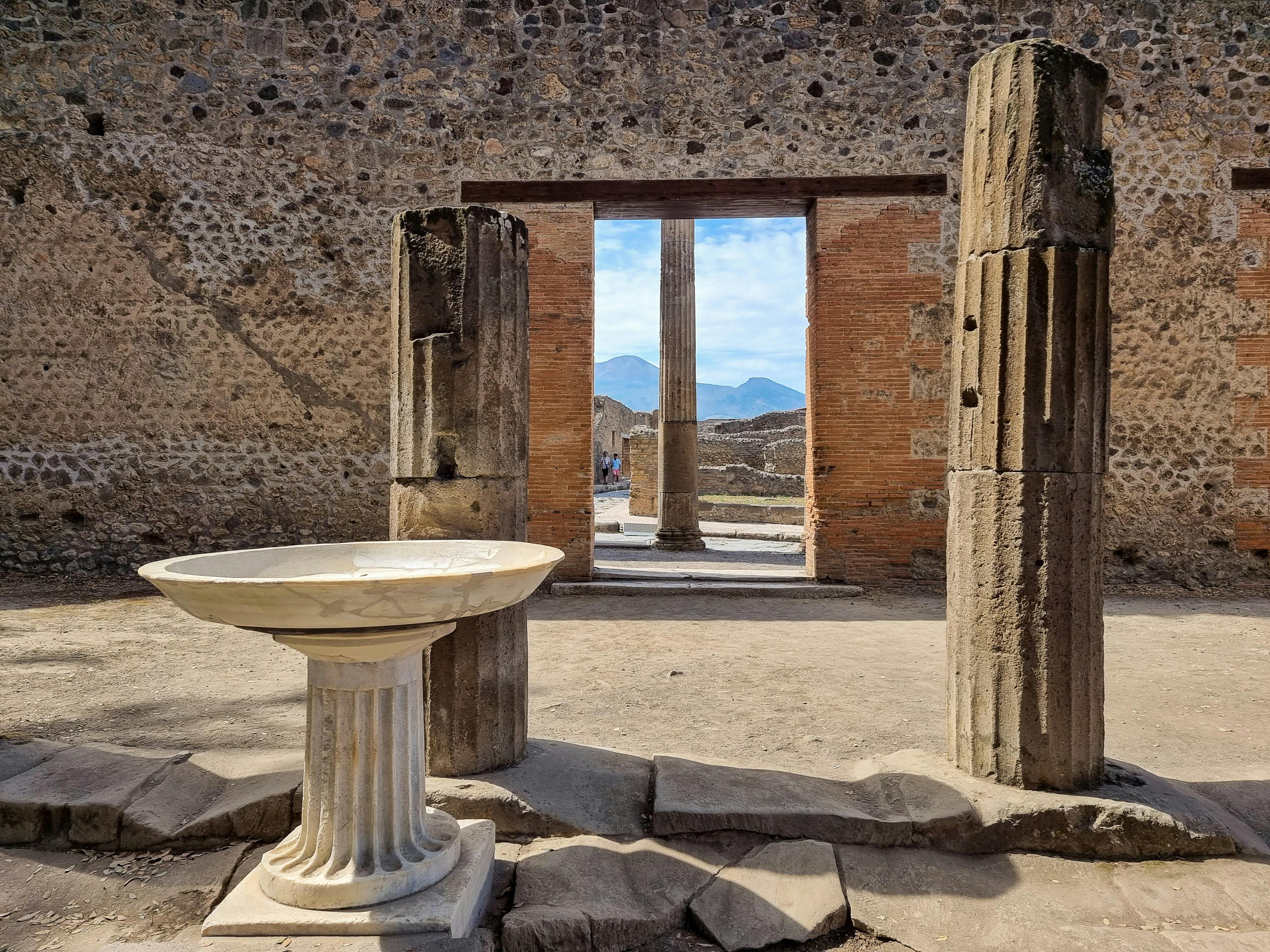
You walk the basalt paving stones of Via dell'Abbondanza, pausing at the Lupanar brothel to examine the erotic frescoes above stone bed platforms, then continue to the Forum's open plaza where Vesuvius looms directly ahead. The House of the Tragic Poet displays a cave canem mosaic; the Amphitheatre, seating twenty thousand, hosted gladiatorial combat until the fatal riot of 59 CE.
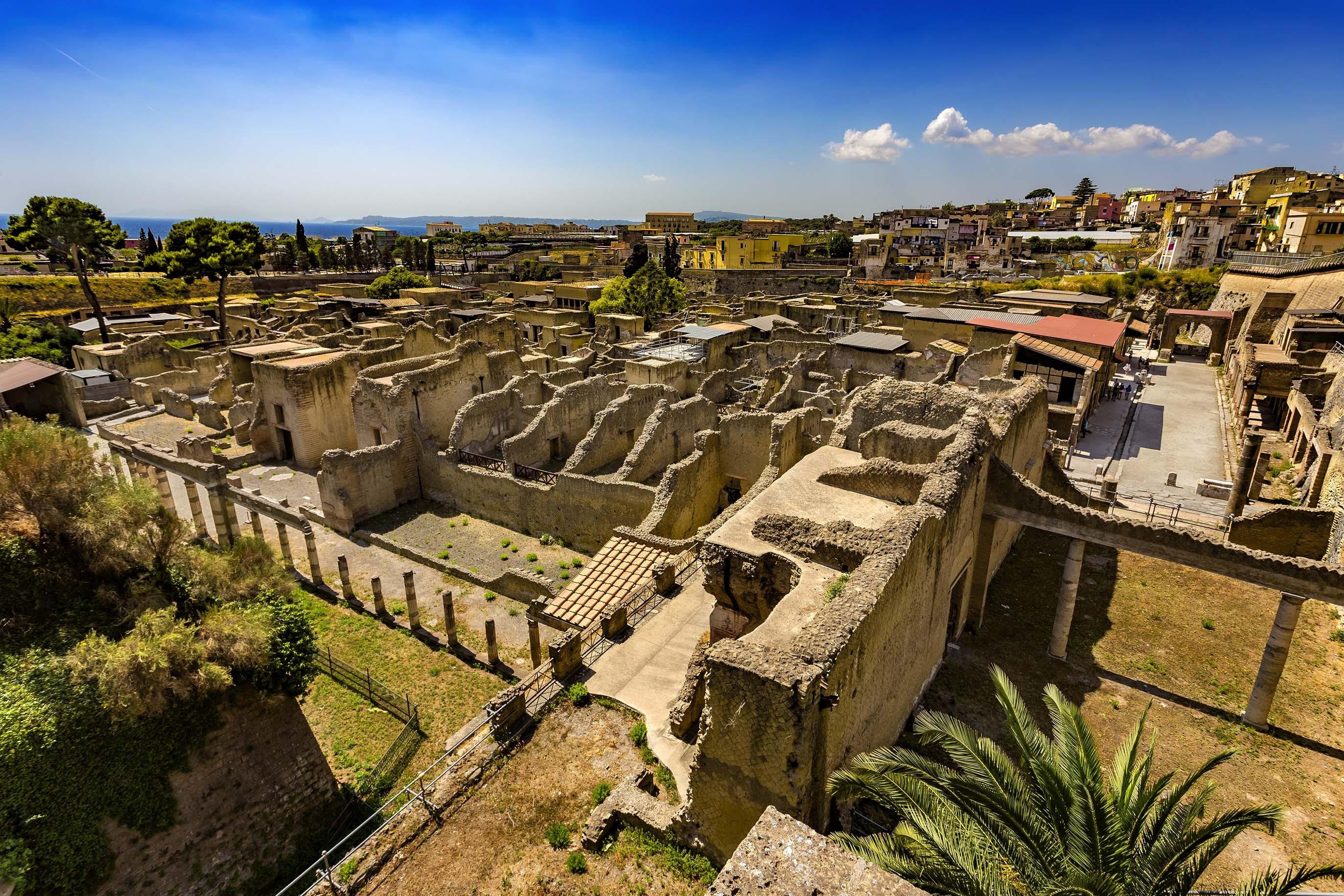
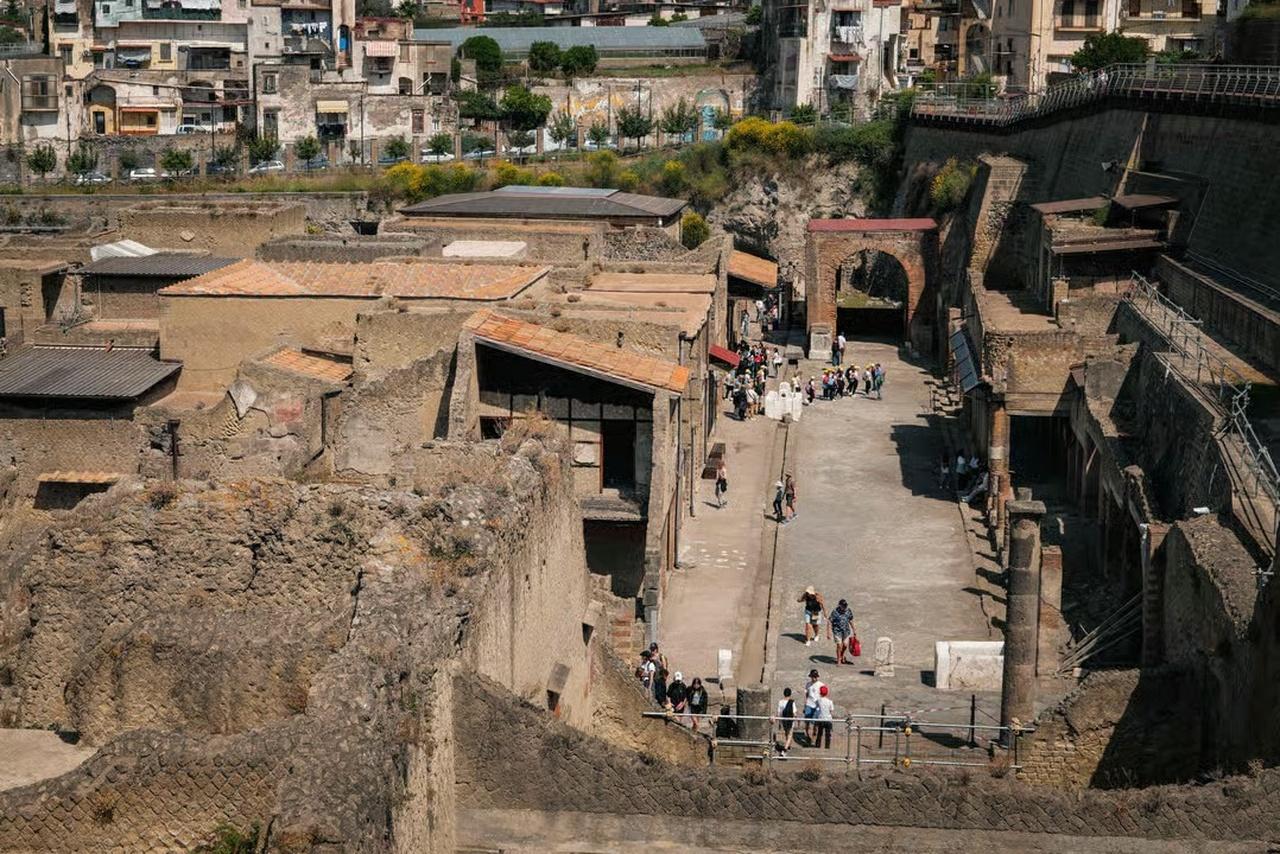
At Herculaneum, fifteen kilometres north, you descend into the excavation, ten metres below modern street level. Wooden screens and roof beams remain intact, and the Terme Suburbane show black-and-white mosaics of Triton and sea creatures. The House of Neptune and Amphitrite preserves its nymphaeum, a fountain wall covered in glass tesserae depicting the divine couple. You examine carbonised loaves in the bakery and peer into the boathouses where families sought refuge.
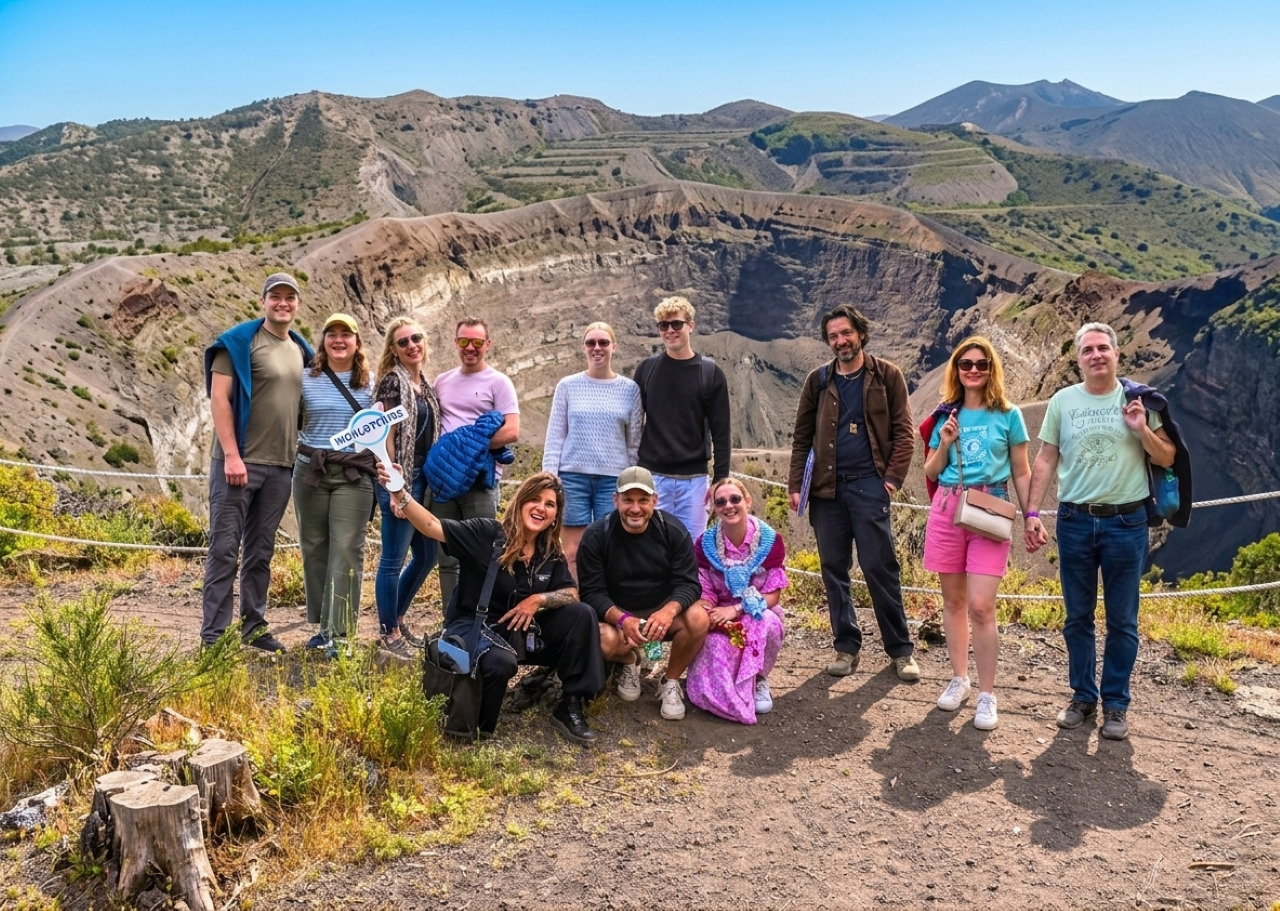
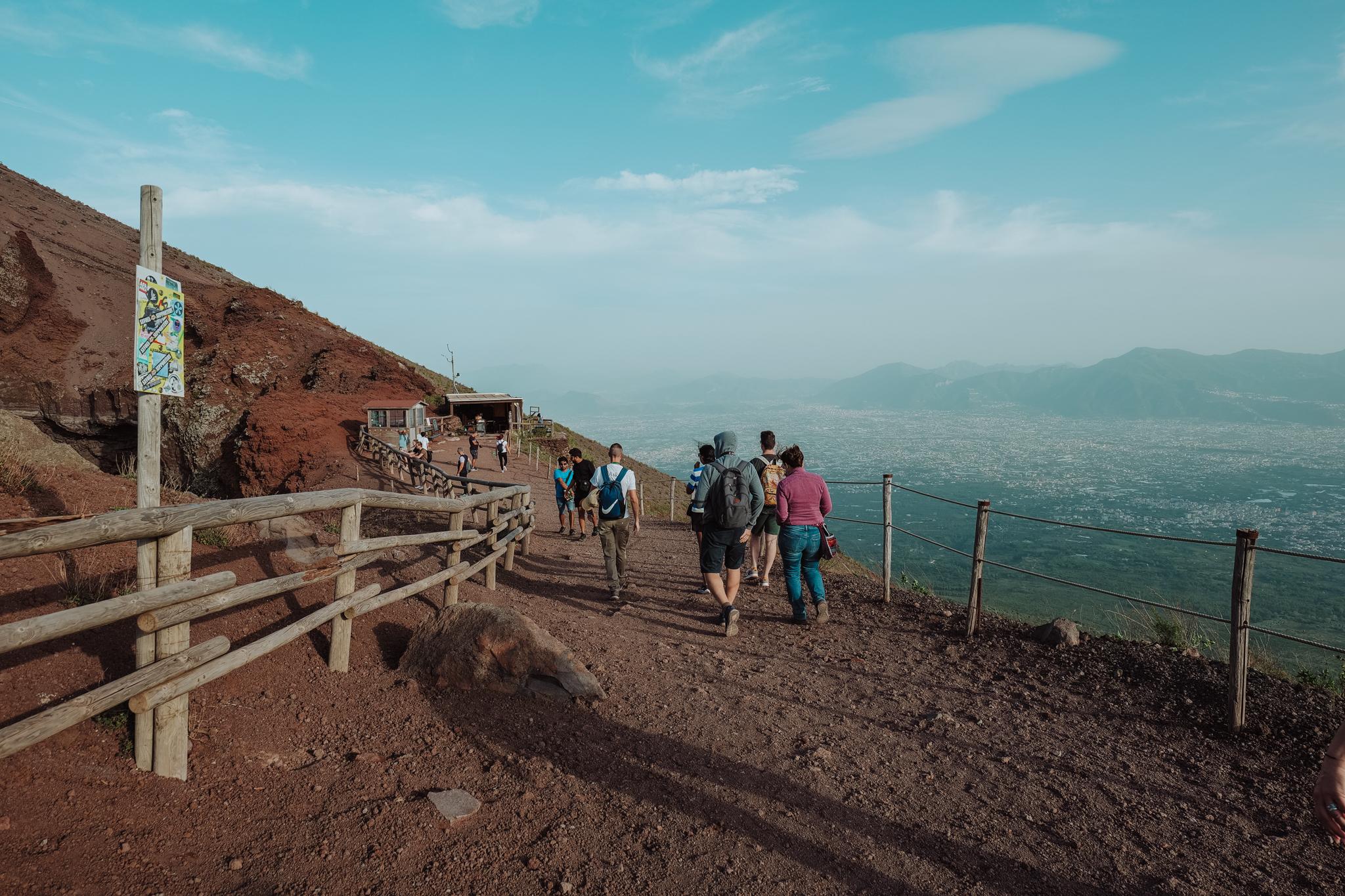
The final leg ascends the volcano's flank, switchbacking through broom and Mediterranean scrub to the 1,000-metre car park. A twenty-minute uphill walk on loose scoria reaches the crater rim, where sulphur vents release steam and the caldera drops 200 metres. You circle a quarter of the rim before retracing your steps to the coach for the return to Naples.
All the details about your upcoming adventure in one place
Mount Vesuvius buried two cities in a single afternoon on 24 August 79 CE, preserving Pompeii and Herculaneum under metres of pumice and pyroclastic surge.
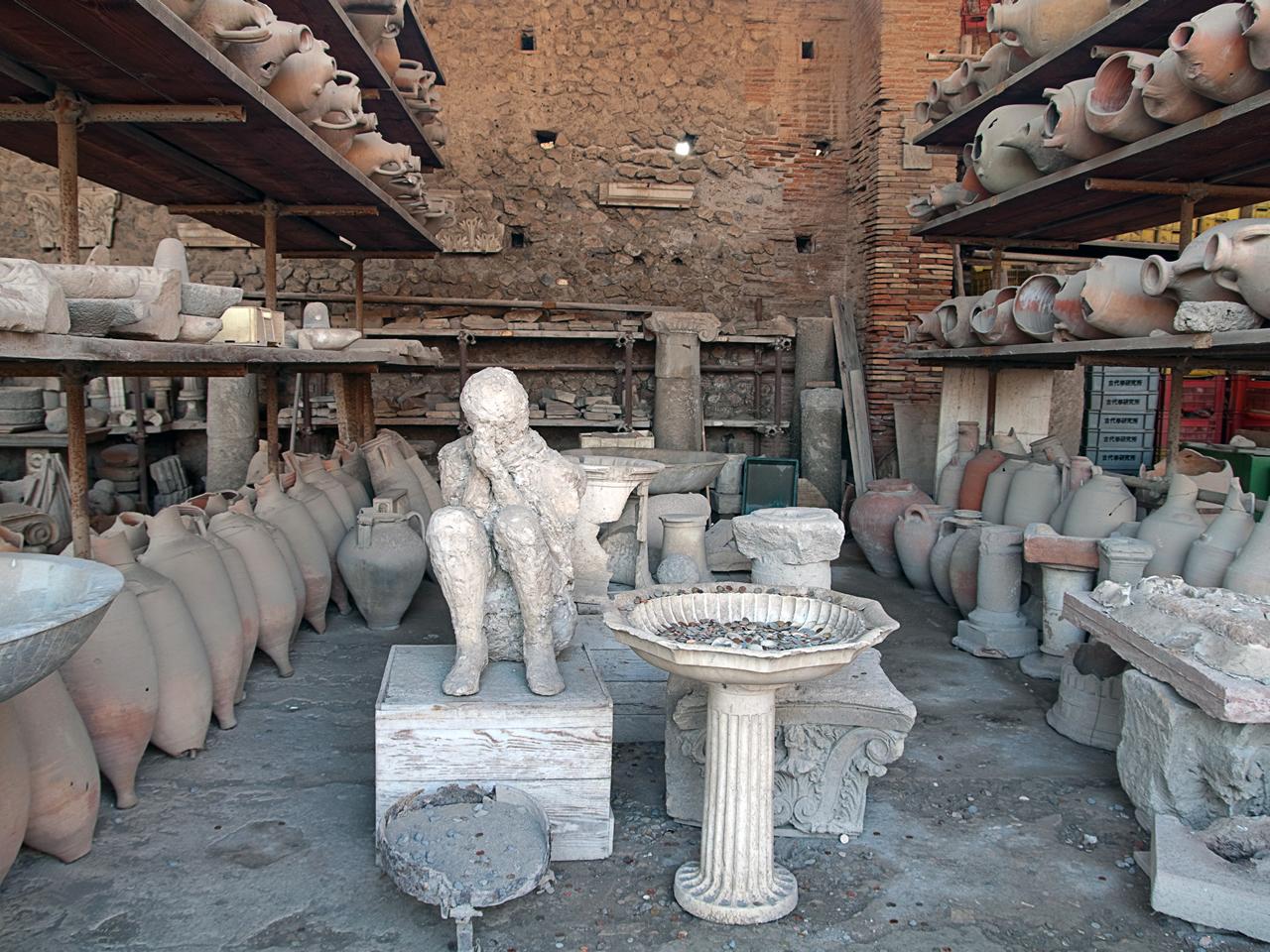
The eruption's thermal shock carbonised wooden beams, sealed frescoes under ash, and left voids where human bodies decomposed, later filled with plaster to reveal the precise postures of death. Excavations began in 1748 at Pompeii and 1738 at Herculaneum, though systematic archaeology did not arrive until the mid-nineteenth century under Giuseppe Fiorelli, who introduced the plaster-cast technique and divided Pompeii into the nine regiones still used today.
Pompeii sprawls across sixty-six hectares, its street grid largely intact. The Forum anchored civic life, flanked by the Basilica, the Temple of Apollo, and macella where fishmongers sold garum in terracotta amphorae. Residential insulae reveal class divisions: the House of the Faun holds a floor mosaic of Alexander the Great's victory at Issus, while modest dwellings along Via dell'Abbondanza show how shopkeepers lived above their bakeries and fulleries. Herculaneum, smaller and wealthier, lies under modern Ercolano, its organic materials preserved by the lack of oxygen beneath solidified mud. Two-storey wooden balconies remain, grain still fills storage jars, and scrolls from the Villa of the Papyri await decipherment.
Vesuvius rises 1,281 metres above the Bay of Naples, its summit crater accessible by a footpath from the 1,000-metre car park. The cone collapsed during the 1944 eruption, the last in a sequence that included events in 1906, 1872, and intermittently since antiquity. Volcanologists monitor seismic activity and fumarole chemistry, as three million people inhabit the zona rossa within the potential blast radius. The caldera offers views across the Sorrentine Peninsula and Capri, the black pumice underfoot a reminder that Vesuvius remains an active stratovolcano.
Day trips combining Pompeii Vesuvius and Herculaneum tour from Naples options typically allocate two hours at Pompeii, ninety minutes at Herculaneum, and an hour for the crater ascent, though the UNESCO World Heritage designation covers only the archaeological parks, not the volcano itself. The Pompeii Archaeological Park opens daily from 09:00 to 19:00, with standard entry at 18 EUR per adult. Professional guides navigate the site's eighty excavated blocks, contextualising the Villa of the Mysteries' Dionysian frescoes, the Stabian Baths' hypocaust system, and the plaster figures displayed in the Granai del Foro storerooms. Herculaneum's waterfront arches, where three hundred skeletons were found in 1980, illustrate the futile attempt to escape by sea as superheated gas enveloped the town.
Vesuvius buried two cities in a single afternoon, preserving Pompeii and Herculaneum under metres of pumice and pyroclastic surge.
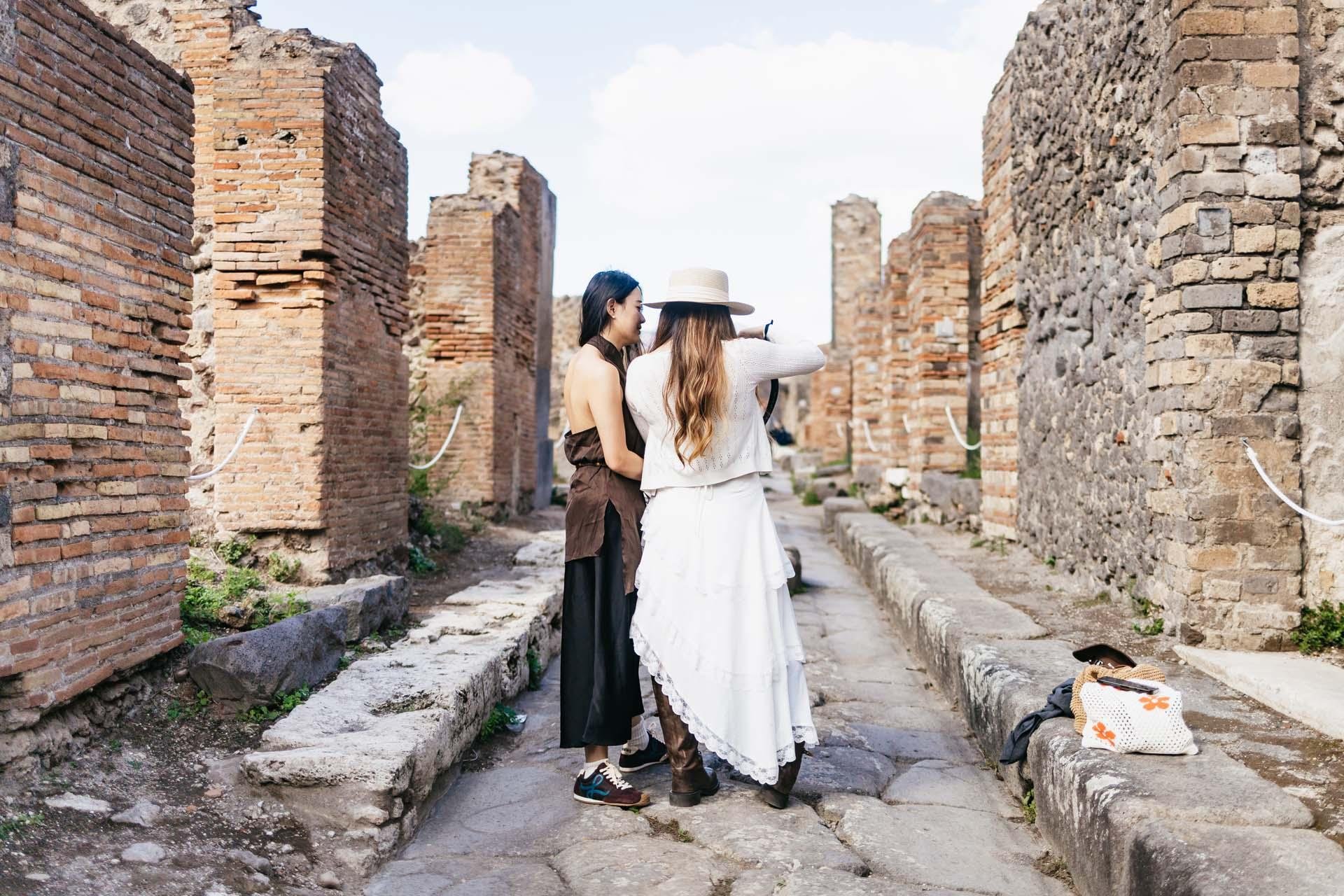
Casual clothing is suitable, but respectful attire is recommended. Sturdy walking shoes are required due to the original Roman cobblestone streets.
Backpacks and large bags exceeding 30x30x15 cm are not permitted inside the archaeological areas. Security checkpoints are active at all main entrances.
Personal photography is permitted for non-commercial use. Tripods and professional equipment require prior authorization from the park administration.
Strollers are allowed but can be difficult to maneuver on uneven basalt stones. Baby carriers are highly recommended for a pompeii vesuvius and herculaneum tour from naples.
Specific paths for visitors with reduced mobility are marked on the official park map. Staff can provide guidance on the most level routes through the ruins.
Picnics are restricted to designated areas within the park boundaries. Plastic water bottles are permitted, and refill stations are available.
Opening Hours
09:00–19:00 daily
Address
Pompeii Archaeological Park, 80045 Pompeii, Metropolitan City of Naples, Italy
Accessibility
Most main paths are accessible with assistance.
Best arrival
09:00–11:00 to avoid heat and crowds
Storage
Lockers available near main entrances
Navigation
Printed site maps provided at gates
Public transport · 00:45 · Low cost
Use the Circumvesuviana train line from Napoli Porta Nolana to Pompeii Scavi.
Car · 00:30 · Parking fees apply
Follow the A3 highway toward Salerno and exit at Pompei Ovest.
Cancellations made at least 24 hours in advance receive a full refund. No refunds are provided for tickets cancelled within the 24-hour window.
Recommended time
6-8 hours
To properly experience a pompeii vesuvius and herculaneum tour from naples, allocate at least one full day to cover these volcanic archeological sites. Visitors often find that dedicated Pompeii and Herculaneum tours require significant walking through ancient Roman villas and stone-paved streets, where crowd density peaks near midday. Selecting early entry helps manage the logistics of these major UNESCO landmarks, ensuring you have enough time to explore the preservation of the plaster casts and mosaic floors before the afternoon congestion increases.
Crowd levels through the day
Weather · crowds · average price — dots go green to amber to red as each metric rises.
Mild temperatures and blooming flora make this ideal for walking tours.
Expect high heat and peak visitor numbers during midday hours.
Comfortable weather in September and October favors extended visits.
Fewer crowds and shorter lines for site entry.
Refill water bottles at the various fountains located throughout the streets. These are marked on the map provided at the entry.
On August 24, 79 AD, Mount Vesuvius erupted with catastrophic force, burying Pompeii under four to six meters of volcanic ash and pumice within hours. Herculaneum, closer to the volcano's base, disappeared beneath pyroclastic flows reaching temperatures of 400 degrees Celsius, which carbonized organic material and preserved wooden structures, food, and even brain tissue. Pliny the Younger documented the eruption from Misenum, describing the towering cloud shaped like an umbrella pine and the panic of fleeing residents. An estimated 16,000 people died across both cities, their final moments frozen in ash casts that archaeologists later created by pouring plaster into voids left by decomposed bodies. Pompeii remained lost for nearly seventeen centuries. Architect Domenico Fontana stumbled upon inscribed walls while digging a canal in 1599 but failed to recognize the site's significance. Systematic excavation began in 1748 under Charles III of Bourbon, who deployed military engineers to tunnel through Herculaneum's hardened volcanic rock. Giuseppe Fiorelli revolutionized the work in 1863 by dividing Pompeii into regions and creating the first plaster casts of victims, transforming the site from a treasure hunt into a scientific discipline. His grid system remains the standard reference for pompeii vesuvius and herculaneum tour from naples itineraries today. Excavations accelerated under Vittorio Spinazzola and Amedeo Maiuri between 1910 and 1961, uncovering entire street fronts, the Villa of Mysteries with its enigmatic Dionysian frescoes, and Herculaneum's luxurious seaside villas. UNESCO inscribed both sites in 1997, recognizing their unparalleled record of daily Roman life. Modern visitors exploring pompeii vesuvius and herculaneum tour from naples routes walk the same stone streets where cart wheels carved grooves two millennia ago, viewing thermopolia with intact food counters, bakeries with carbonized loaves still in ovens, and graffiti scratched by citizens whose voices echo across time.
Mount Vesuvius erupts on August 24, burying Pompeii in ash and Herculaneum in pyroclastic flows, killing an estimated 16,000 people
Architect Domenico Fontana discovers inscribed walls while digging a canal but fails to recognize Pompeii's significance
Systematic excavation begins under Charles III of Bourbon, initially focusing on Herculaneum's hardened volcanic deposits
Giuseppe Fiorelli introduces scientific grid excavation methods and creates the first plaster casts of Vesuvius victims
Directors Vittorio Spinazzola and Amedeo Maiuri uncover major structures including the Villa of Mysteries and Herculaneum's seaside district
UNESCO inscribes Pompeii and Herculaneum as World Heritage Sites, recognizing their archaeological value
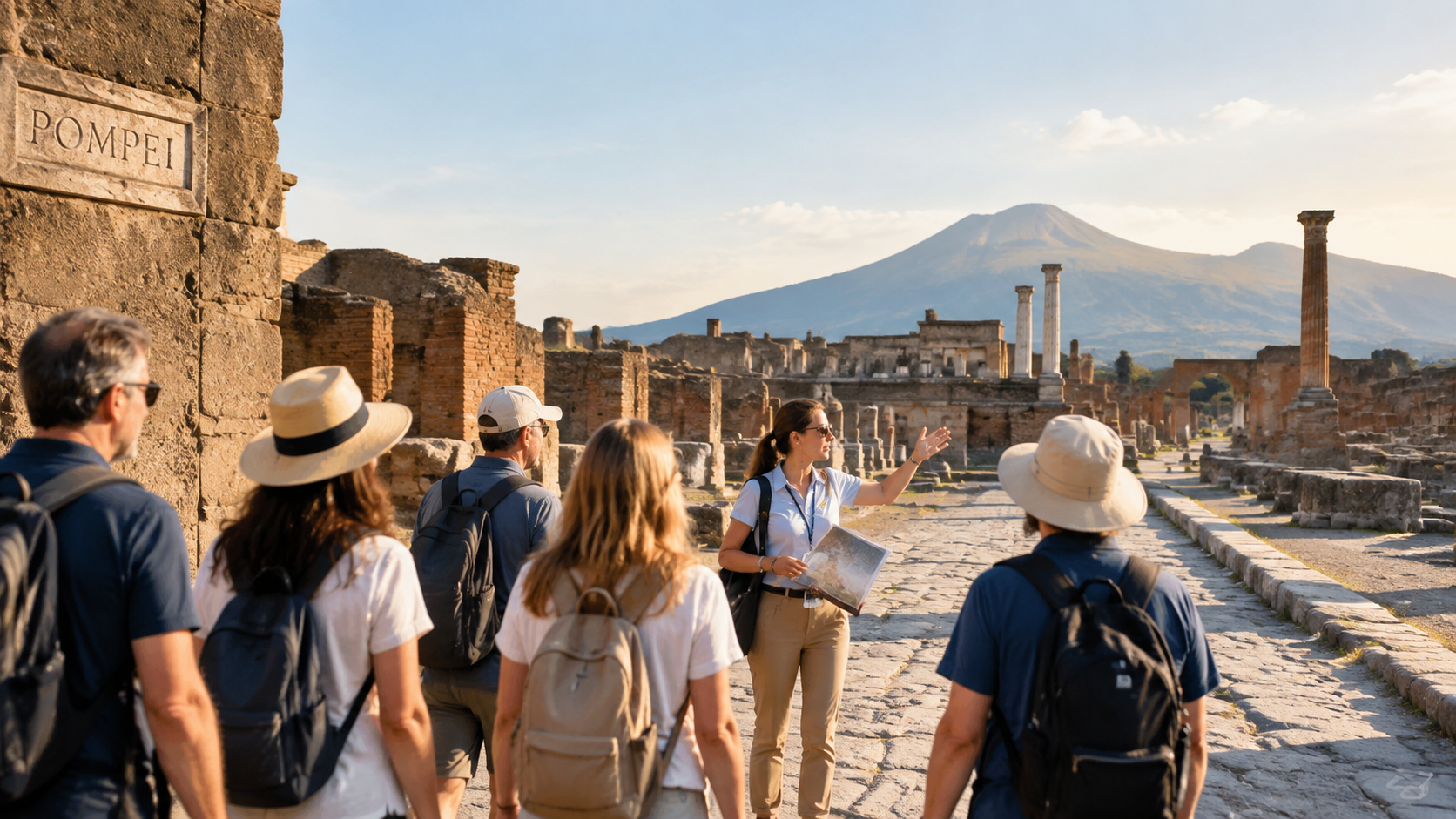
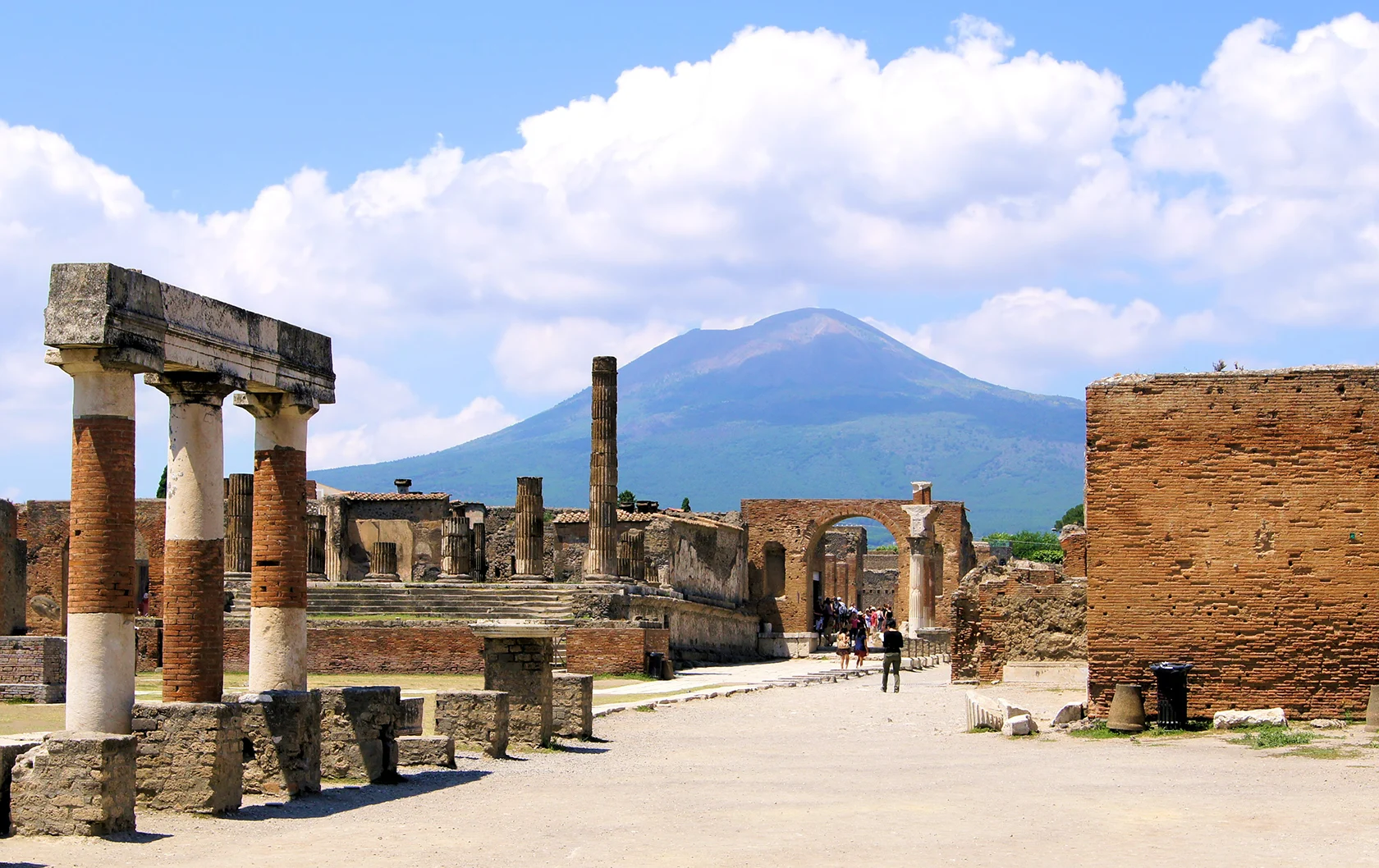
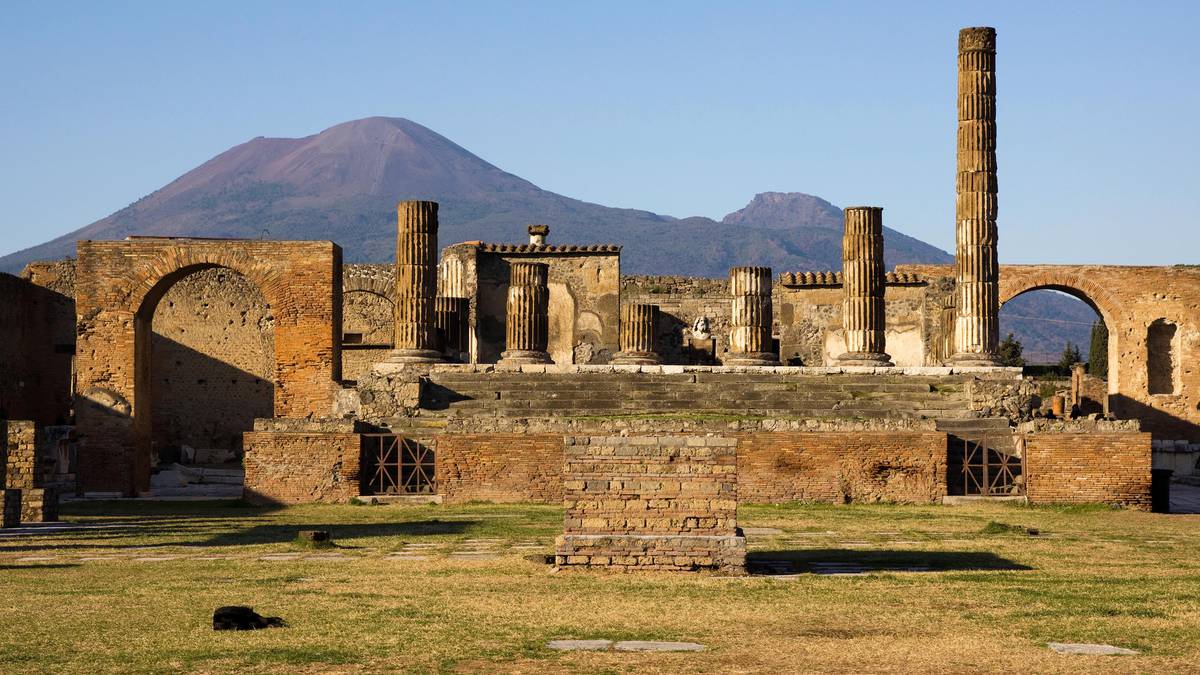
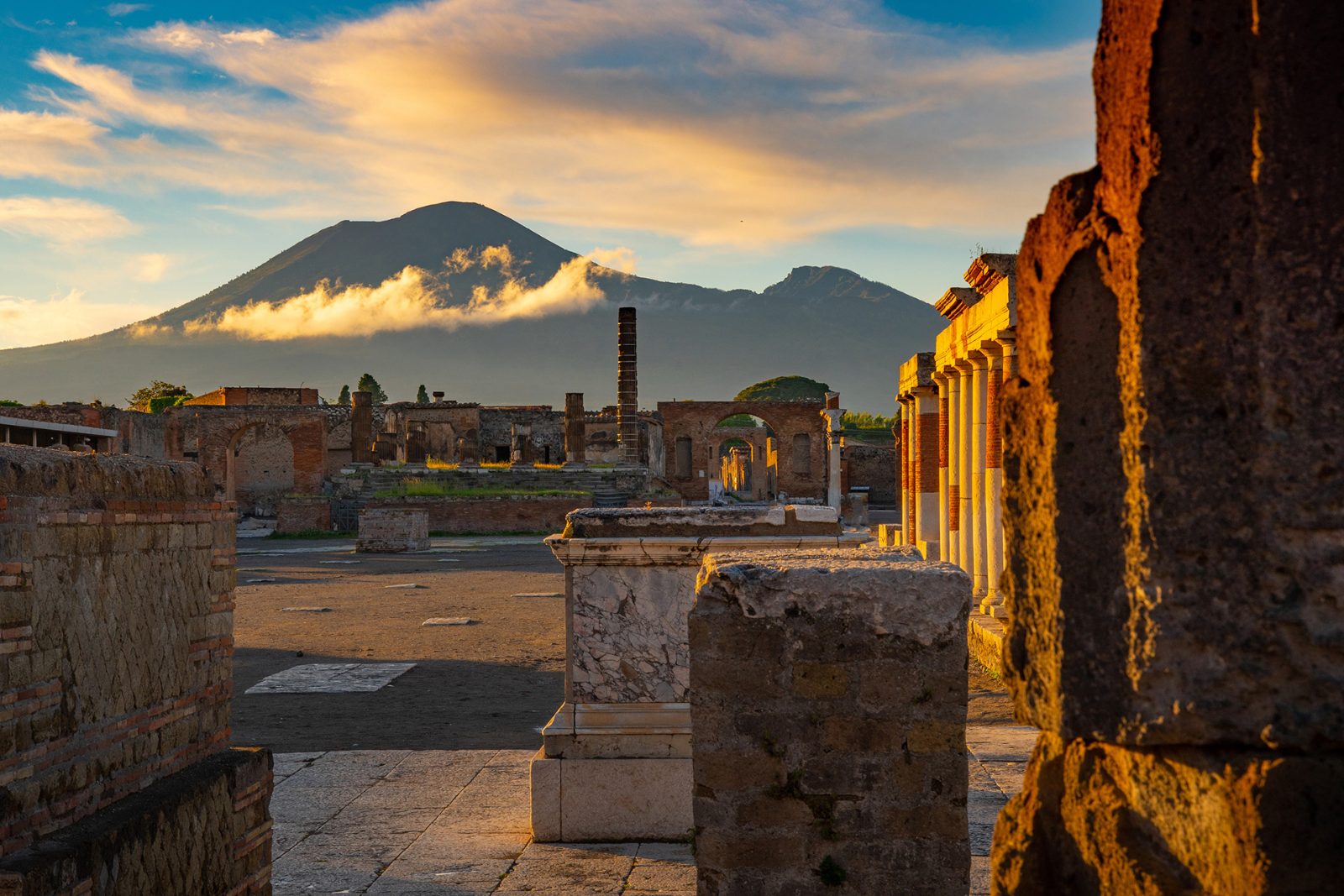
Stand at the southern end to capture the iconic perspective of the ruins framed by the silhouette of Mount Vesuvius in the background. This central location offers the classic composition for any pompeii vesuvius and herculaneum tour from naples.
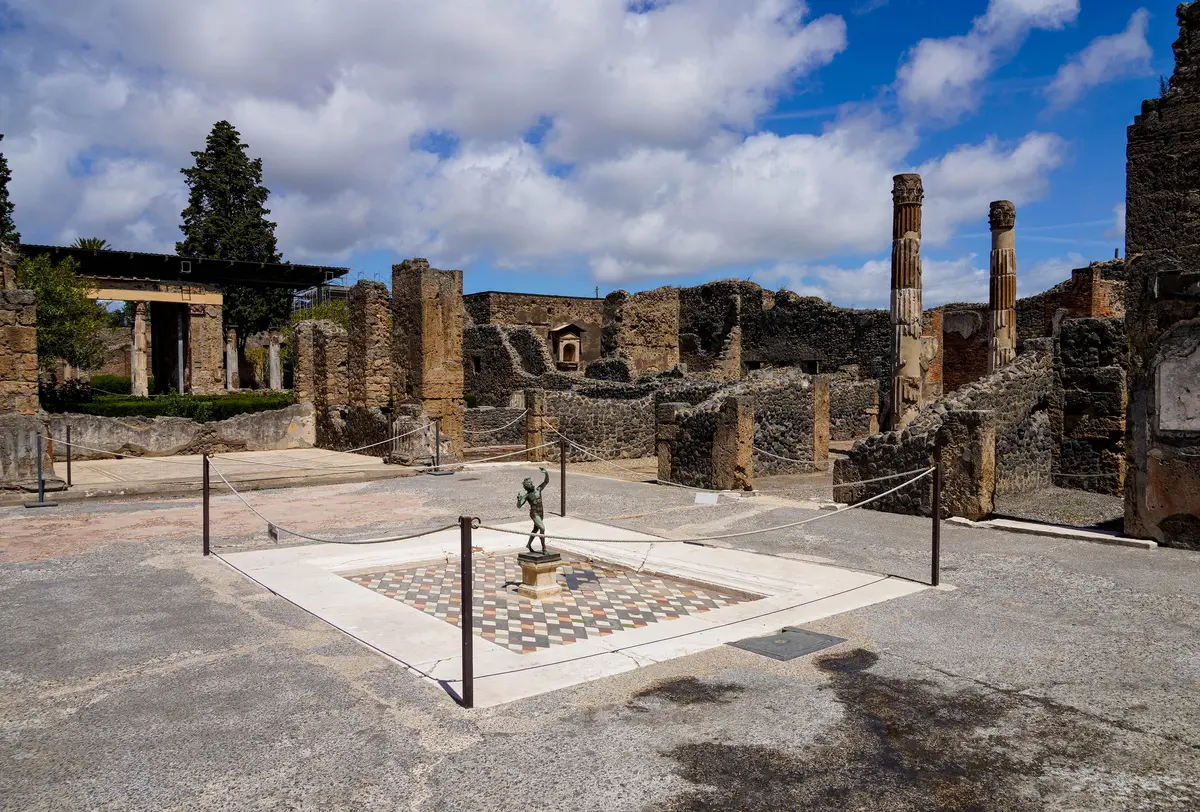
Position yourself in the center of the large peristyle garden to photograph the intricate mosaic floors and surrounding classical architecture. The light here illuminates the preserved colonnades effectively for those seeking architectural detail during their pompeii vesuvius and herculaneum tour from naples tour.
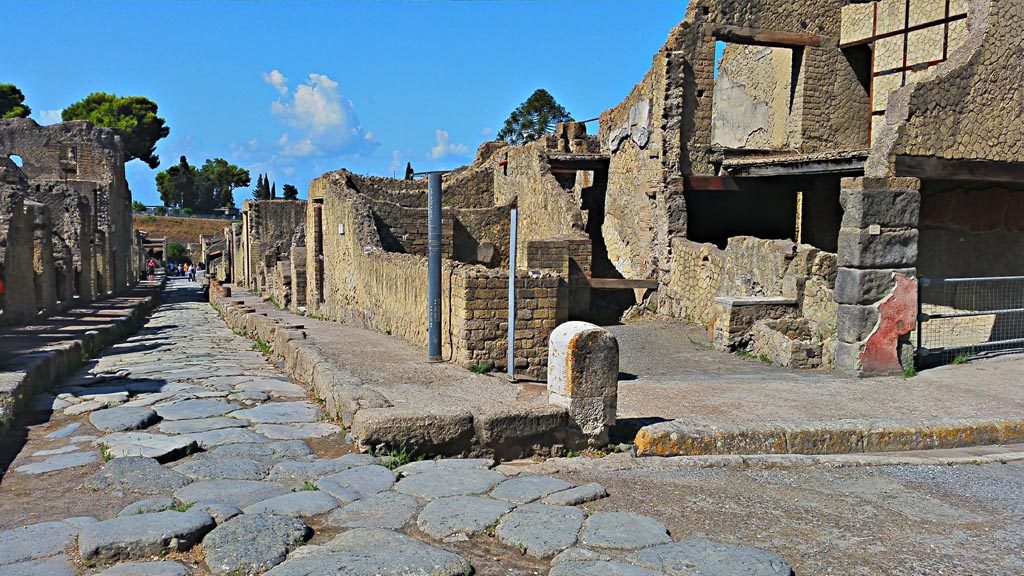
Walk along this ancient street in Herculaneum to capture the well-preserved multi-story buildings and volcanic stone paving. It provides a unique low-angle perspective of the archaeological site as part of your pompeii vesuvius and herculaneum tour from naples tours.
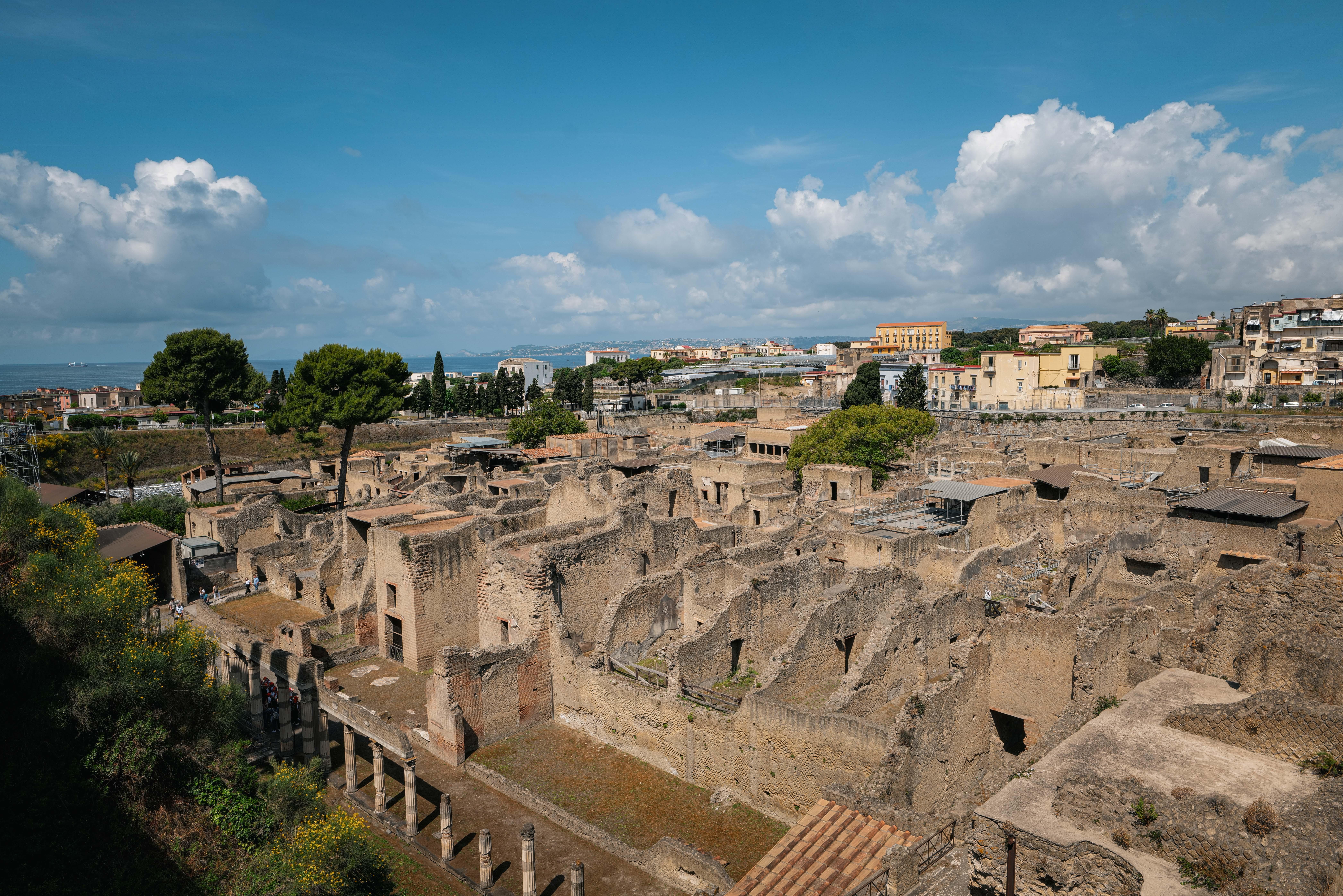
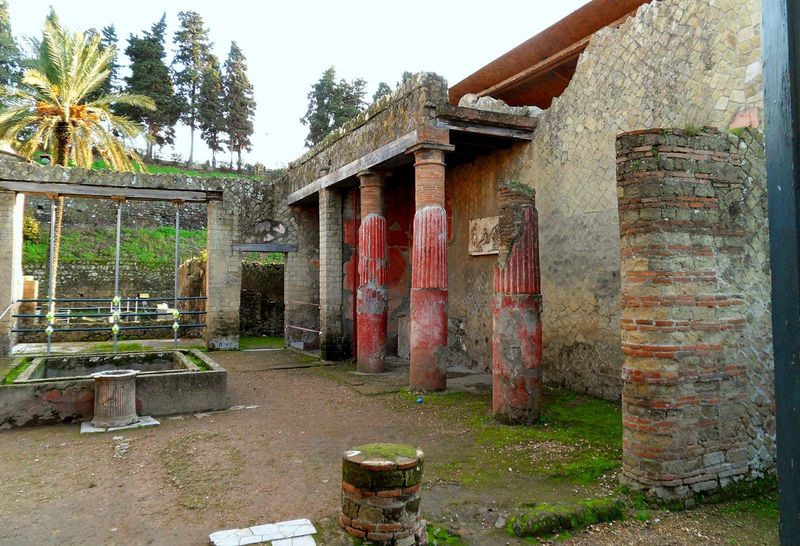
Photograph the expansive ruins and the layers of volcanic rock that once buried this luxurious residence. Standing near the edge of the excavation allows for wide shots of the structure against the horizon during your pompeii vesuvius and herculaneum tour from naples tickets experience.
Planning a pompeii vesuvius and herculaneum tour from naples requires careful preparation to navigate the extensive volcanic ruins with children. While the vast archaeological sites offer a unique history lesson, families should prioritize comfort and manageable itineraries to ensure a successful day exploring these ancient Roman landmarks.
The uneven basalt stone streets of Pompeii make standard strollers difficult to use, so consider a sturdy carrier for younger children; Herculaneum is smaller and more compact, though still features challenging terrain for wheels.
Baby-change tables are available at designated points within the Pompeii Archaeological Park, though it is wise to carry all essential supplies with you as facilities can be spaced far apart.
These sites are best suited for children aged seven and older who can handle long walks and appreciate the historical context, especially when booking organized pompeii vesuvius and herculaneum tour from naples tours.
The best arrival window is 09:00–11:00 to avoid mid-day heat and large tour group crowds; plan for frequent water breaks and shade seeking, as there is limited natural coverage throughout the excavations.
Ensure you have secured your pompeii vesuvius and herculaneum tour from naples tickets in advance, as the site remains busy; keep in mind the standard entry for Pompeii Archaeological Park is 18 EUR per adult.
Visitors planning a pompeii vesuvius and herculaneum tour from naples will find several convenient dining choices located just steps from the main park entrances. While the archaeological sites offer limited options, the surrounding streets in Pompeii feature established venues perfect for a meal before or after your walk through these UNESCO heritage landmarks.
This venue recreates an ancient Roman tavern atmosphere with traditional Campania cuisine. It is a popular choice for those seeking a themed dining experience after purchasing their pompeii vesuvius and herculaneum tour from naples tickets.
Perfect for a quick bite, this spot serves authentic Neapolitan pizza by the slice and local snacks. It serves as an efficient stop for travelers balancing their pompeii vesuvius and herculaneum tour from naples tours with a busy schedule.
Located near the site, this establishment offers a broad menu of pasta and grilled dishes suitable for groups. It remains a reliable destination for visitors who want to relax after finishing their pompeii vesuvius and herculaneum tour from naples tour.
Everything you need to know for your journey
The park is open daily from 09:00–19:00.
Standard entry for Pompeii Archaeological Park is 18 EUR per adult.
Wear comfortable walking shoes and weather-appropriate clothing for your pompeii vesuvius and herculaneum tour from naples.
Prohibited items include drones, tripods, and large bags exceeding 30x30x15 cm.
Yes, storage is provided near the entrances for guests on a pompeii vesuvius and herculaneum tour from naples.
The best arrival window is 09:00–11:00 to avoid large crowds and heat.
Food is allowed but must be consumed in designated areas only.
Accessibility is limited but possible; ask staff for the specific mobility-friendly route.
The Circumvesuviana train from Naples is the most common method for a pompeii vesuvius and herculaneum tour from naples.
Cancellations made 24 hours in advance receive a full refund.
A significant religious site located near the modern city center.
Located conveniently near the park entrance
Join thousands of happy travelers who have discovered this incredible experience
Book Your Experience Now