8 hr
Pompeii & Mount Vesuvius Day Tour from Naples with Pizza
- Expert local guide
- Small group
- Skip-the-line access
- Free cancellation
Pompeii and Herculaneum Tour from Naples Port
Shore excursions timed to ship schedules, priority entry included
Compare fares, pick the fit — all bookings are mobile-voucher and eligible for free cancellation where shown.
8 hr
7 hr 30 min
3 hr 30 min
Choosing the right entrance pass is essential when planning your pompeii and herculaneum tour from naples port. Review the options below to select the ticket that best fits your exploration of these historic landmarks.
| Pompeii Express Standard Entry |
Top pick Pompeii Plus Expanded Access |
|
|---|---|---|
| Access Scope | Ancient city ruins | City ruins plus suburban villas |
| Entrance Fee | 20 EUR | 25 EUR |
| Valid Entrances | Porta Marina/Esedra/Anfiteatro | Porta Marina/Esedra/Anfiteatro |
| Includes Villa Access | None | Villa of the Mysteries and others |
| Best for | First-time visitors | Deep-history enthusiasts |
| See tickets & prices |
Verdict: Select the Pompeii Plus ticket for your pompeii and herculaneum tour from naples port if you wish to explore the exclusive suburban villas alongside the main archaeological site.
Worth it for cruise passengers on tight schedules
A pompeii and herculaneum tour from naples port delivers clear value for cruise passengers facing strict departure windows. Independent travel requires coordinating Circumvesuviana trains, navigating ticket queues at both archaeological sites, and managing return timing—risky when your ship won't wait. Organized tours eliminate that stress while covering transport, priority entry, and expert commentary across both Roman ruins. The 20 EUR Pompeii entrance fee plus Herculaneum admission, local transport costs, and time lost to logistics make guided options competitive on pure economics. Half-day excursions with priority entry run tighter schedules for passengers with afternoon departures, while full-day pompeii and herculaneum tour from naples port tickets bundling Vesuvius or the Amalfi Coast justify longer shore leave windows. The value proposition hinges on your port time: six-plus hours favors combination tours; four-hour windows demand focused half-day formats. Solo travelers comfortable with Campanian transit and flexible schedules gain less, but most cruise guests pay primarily for guaranteed punctual return—the ancient frescoes and volcanic context become the bonus.
Bottom line: For cruise passengers, the pompeii and herculaneum tour from naples port trades modest premium for elimination of the single risk independent travel cannot solve—missing your ship.
Pompeii offers a massive, sprawling cityscape, while Herculaneum provides a more intimate look at Roman life; most cruise passengers find that a pompeii and herculaneum tour from naples port helps them decide which fits their schedule best.
|
Top pick Pompeii |
Herculaneum | |
|---|---|---|
| Scale and Size | Extensive city ruins | Compact residential area |
| Preservation Level | Structural stone remains | Organic materials and wood |
| Time Required | 3–5 hours | 1.5–2 hours |
| Walking Intensity | High due to scale | Low to moderate |
| Crowd Density | High volume traffic | Moderate volume traffic |
| Accessibility | Moderate ground unevenness | Easier navigation for mobility |
| See tickets & prices |
Verdict: For travelers seeking a quick archaeological immersion, these pompeii and herculaneum tour from naples port tickets offer distinct experiences, with Herculaneum serving as the superior choice for those prioritizing preserved details over sheer landscape variety.
Hand-picked experiences loved by thousands of travelers
8 hours
Free Cancellation
Discover ancient Pompeii's ruins and hike volcanic Vesuvius with priority entry and expert guides
9 hours
Free Cancellation
Discover two UNESCO treasures in one journey: ancient Pompeii's ruins and the stunning Amalfi coastline.
7-11 hours
Free Cancellation
Visit two ancient Roman cities frozen in time by Vesuvius with an expert archaeologist guide
3 hours 30 minutes
Free Cancellation
Step back two millennia at the ruins frozen by Vesuvius, with roundtrip transport and expert commentary
7 hours
Free Cancellation
Explore two legendary volcanic burial sites in a single day with an expert archaeologist guide
4 hours
Free Cancellation
Half-day archaeological adventure perfect for cruise passengers docking at Naples harbor
3 hours
Free Cancellation
Discover the remarkably preserved ruins of Herculaneum with an expert guide and priority entrance
8 hours
Free Cancellation
Journey through ancient streets with an archaeologist, savor regional cuisine, then climb an active volcano
Depart Naples port via private transfer or shuttle service
Explore the forum and thermal baths with a professional guide
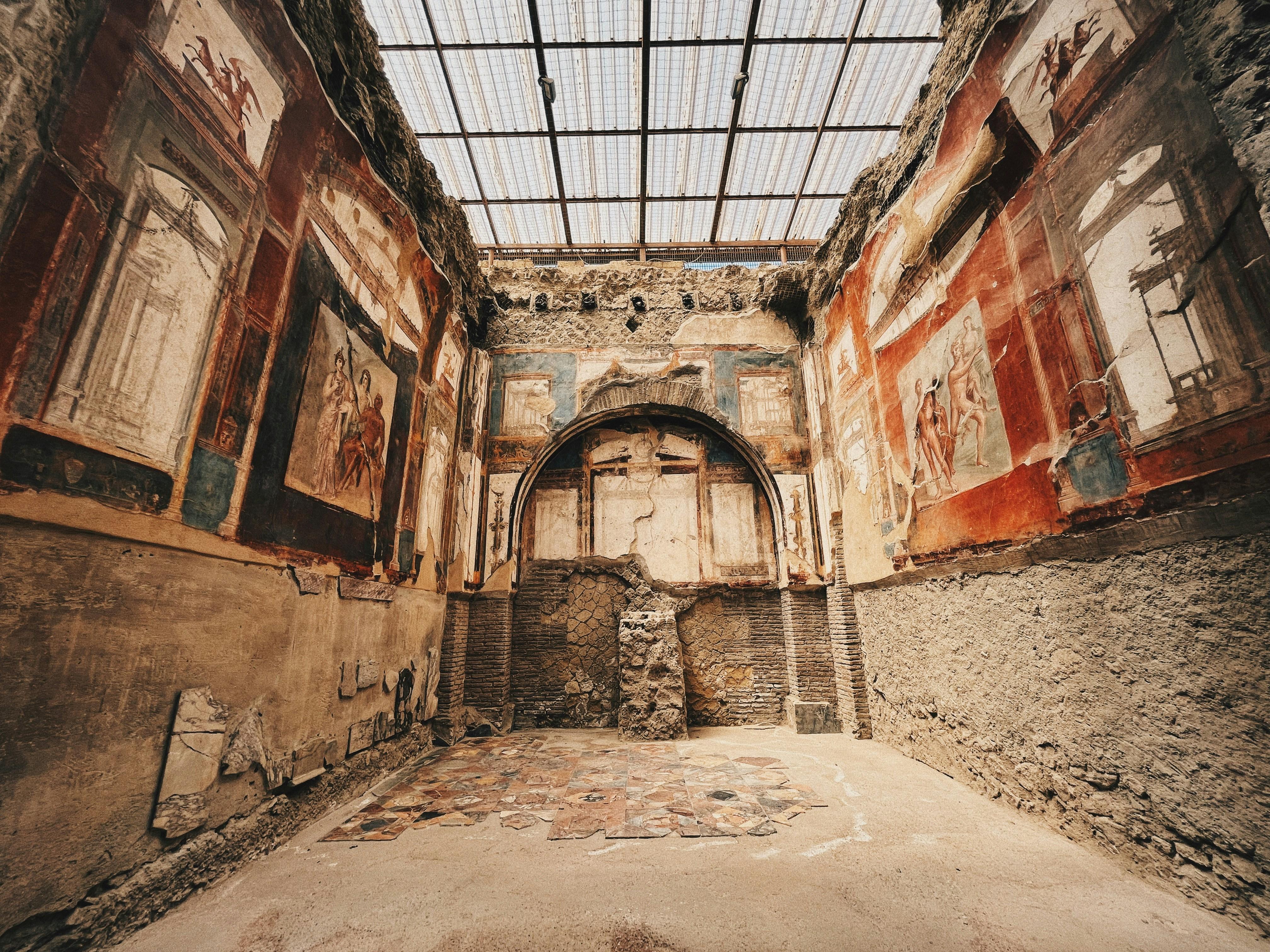
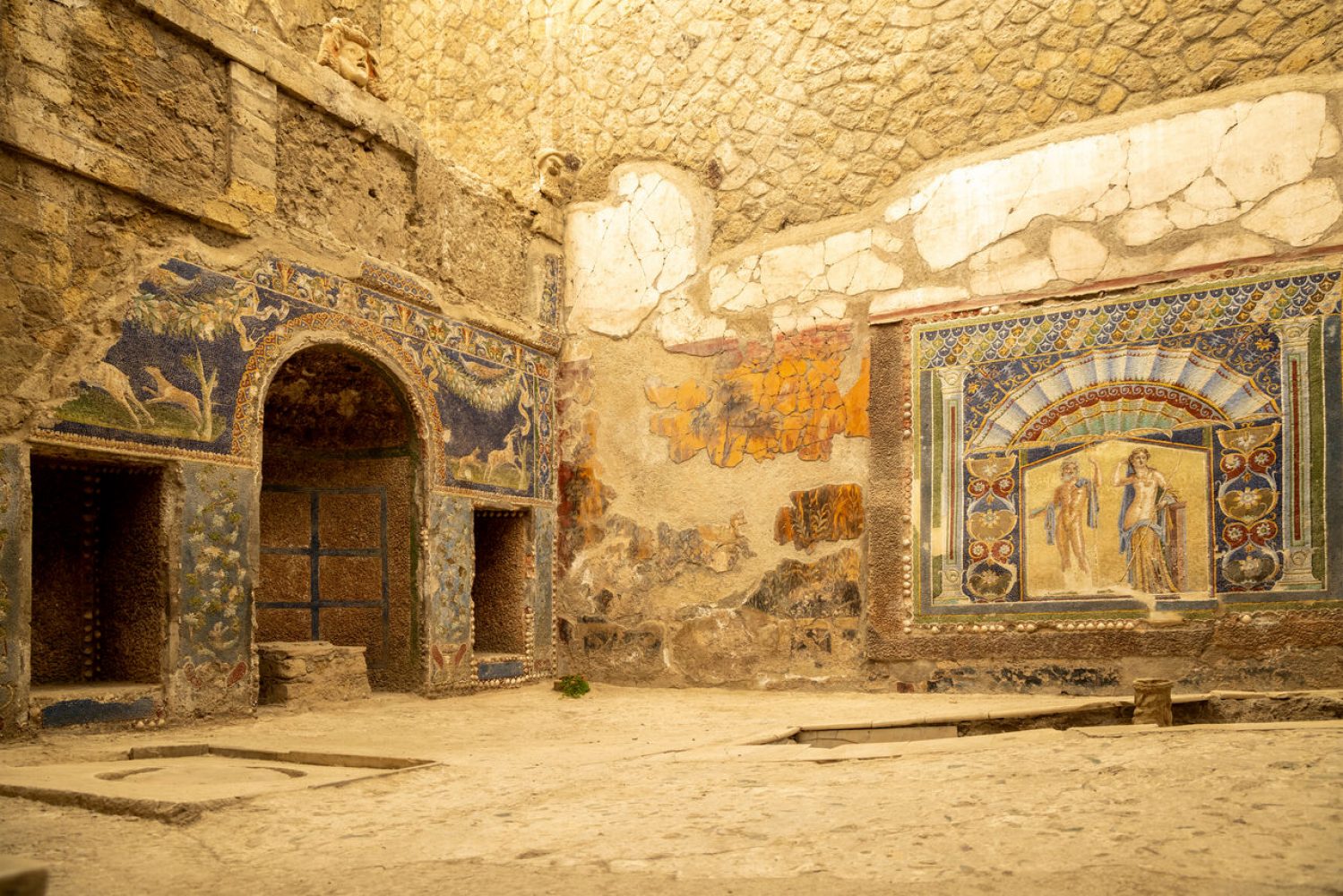
Tour the well-preserved villas and mosaics of Herculaneum
Travel back to the cruise port for departure
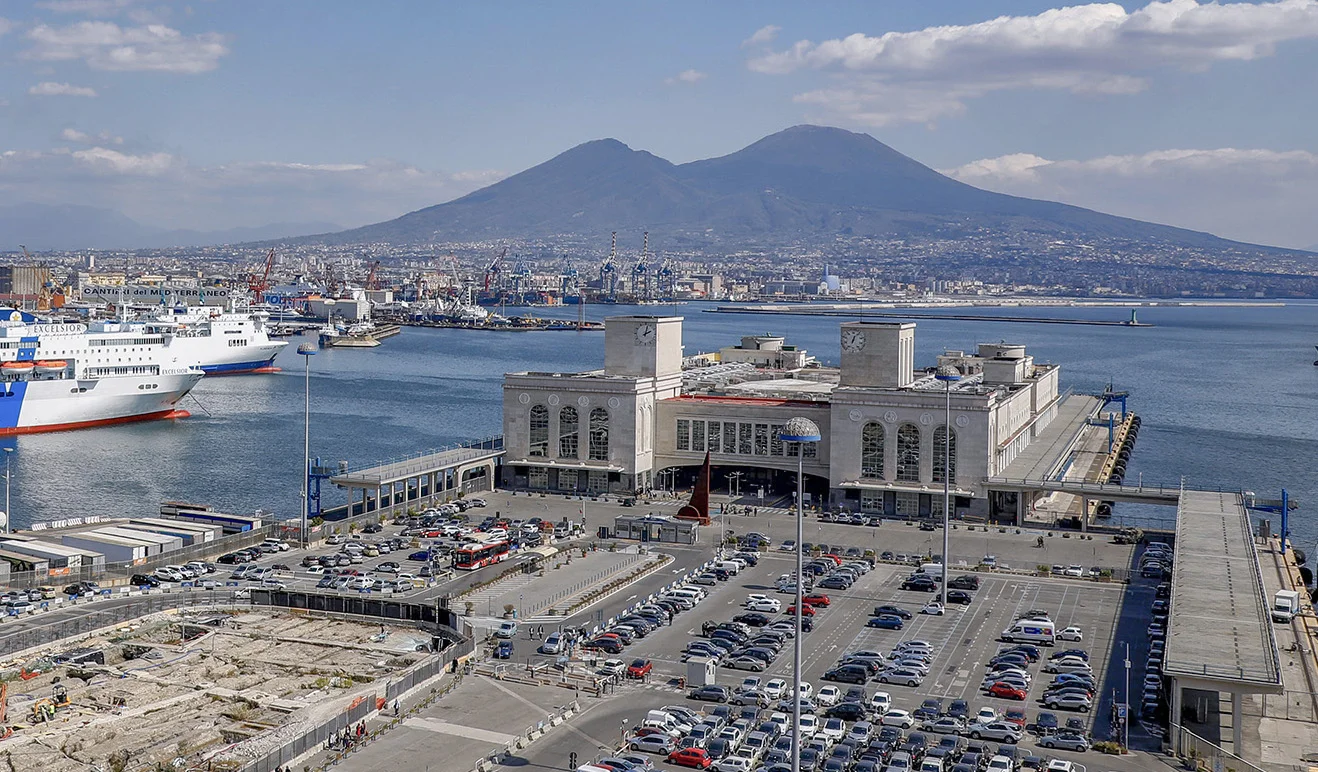
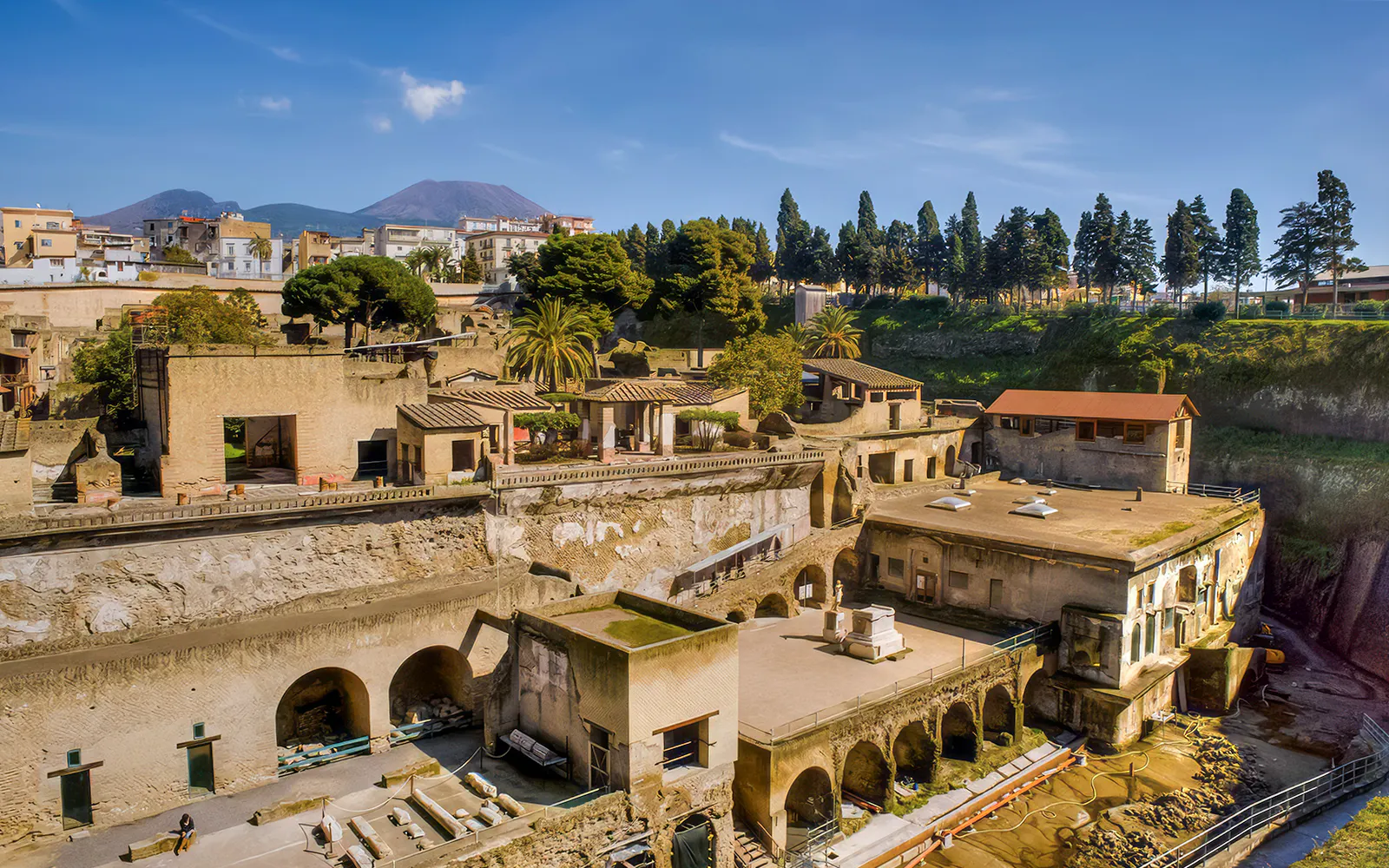
You disembark at Molo Beverello and meet your driver holding a port-transfer placard. The motorcoach departs the terminal and follows the coastal autostrada southeast, reaching Herculaneum in thirty minutes. You enter through the modern pavilion overlooking the excavated grid.
Wooden screens still frame upper-storey windows. Mosaic thresholds bear Latin greetings. You descend the Decumanus Maximus, pausing at the thermopolium counter where Romans bought hot food from terracotta dolia sunk into marble.
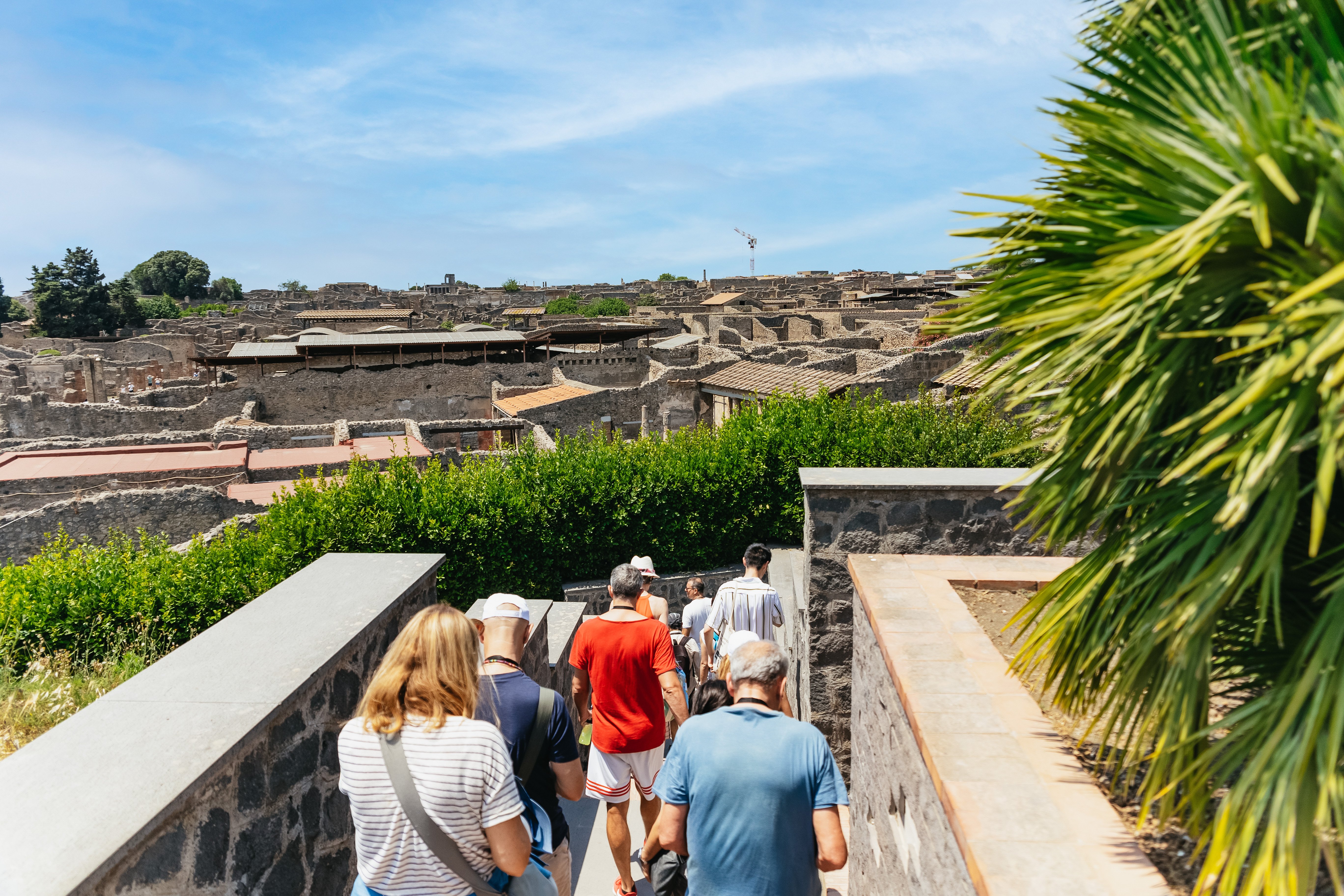
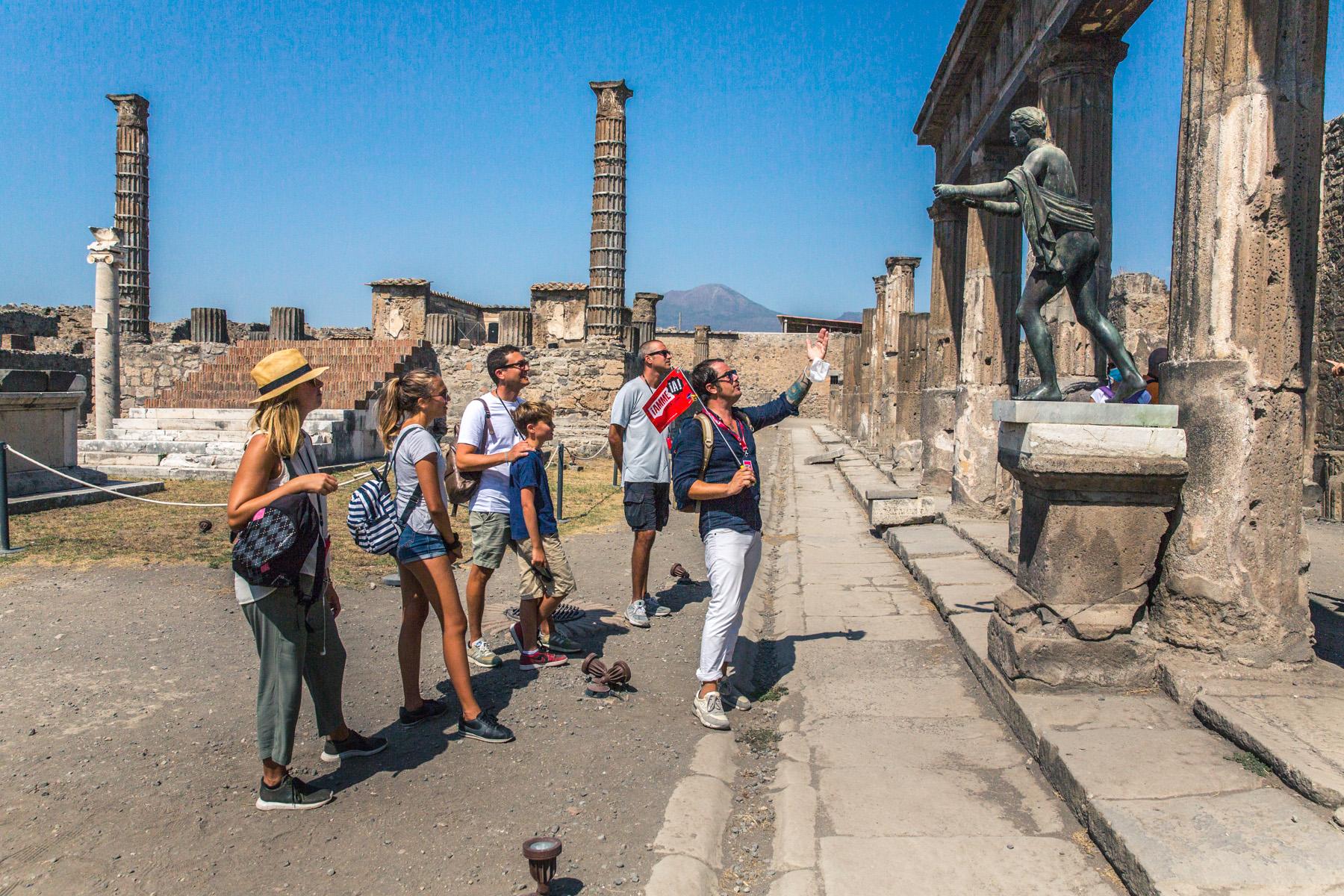
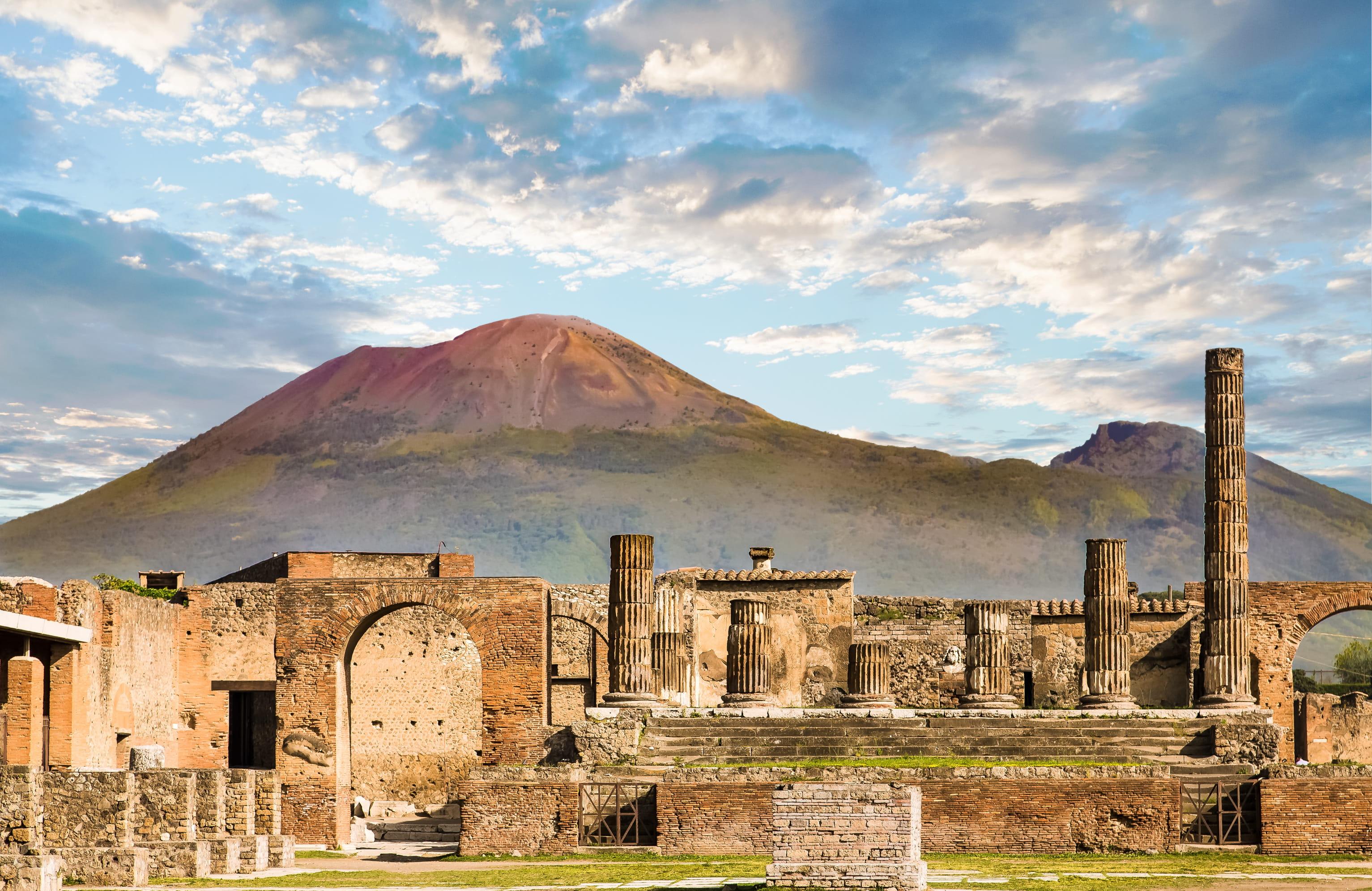
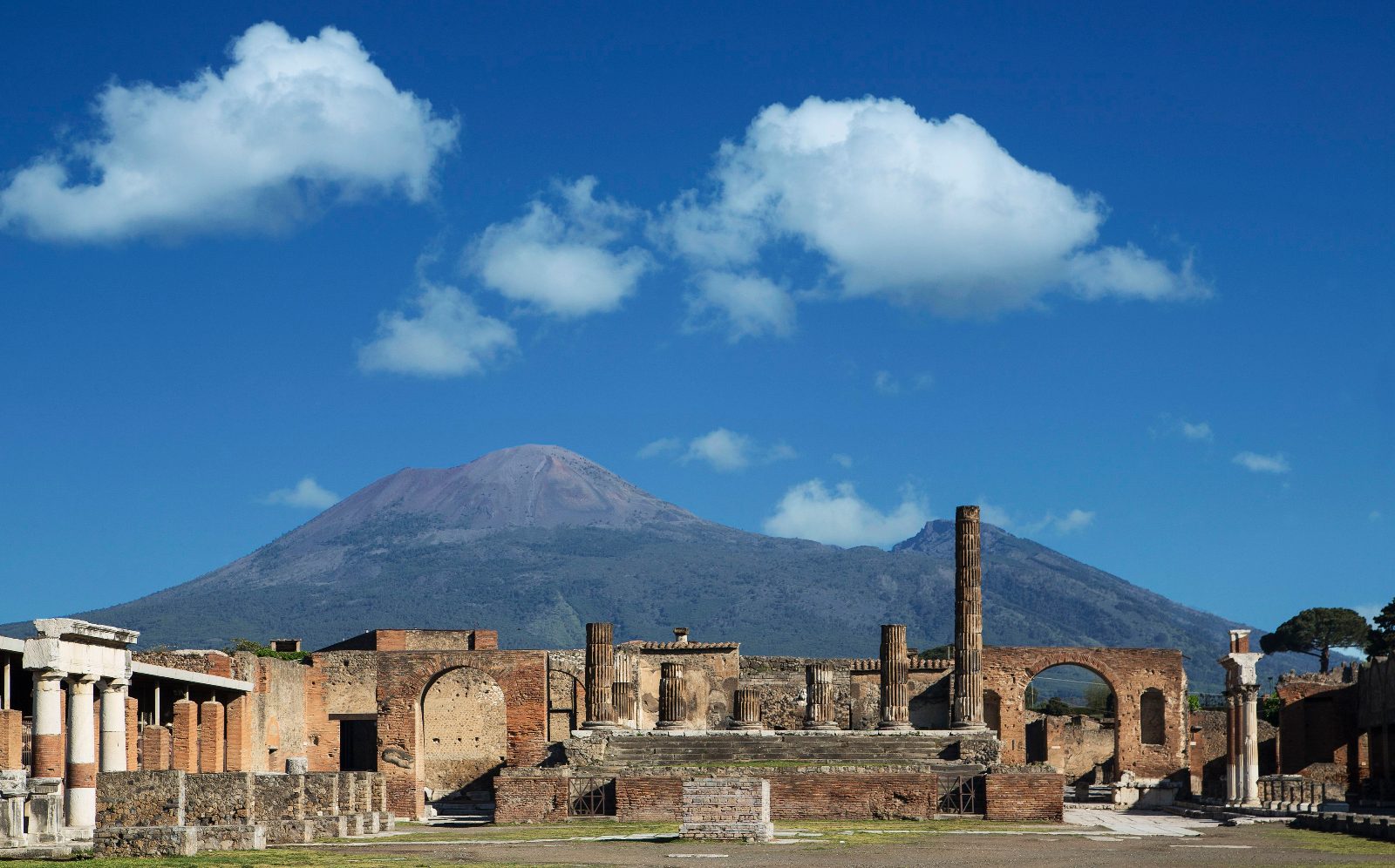
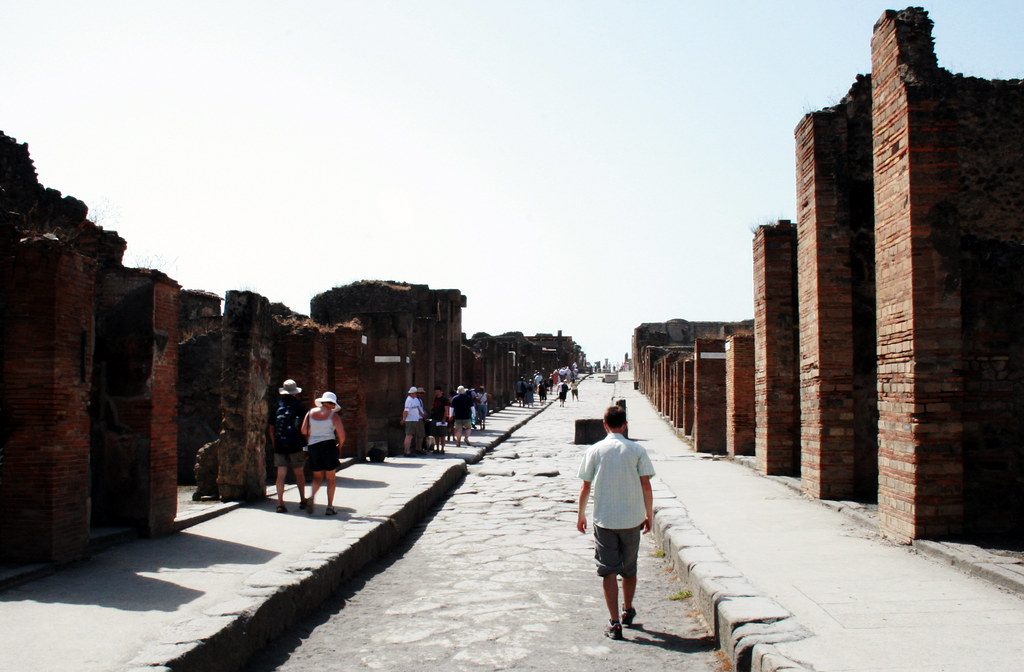
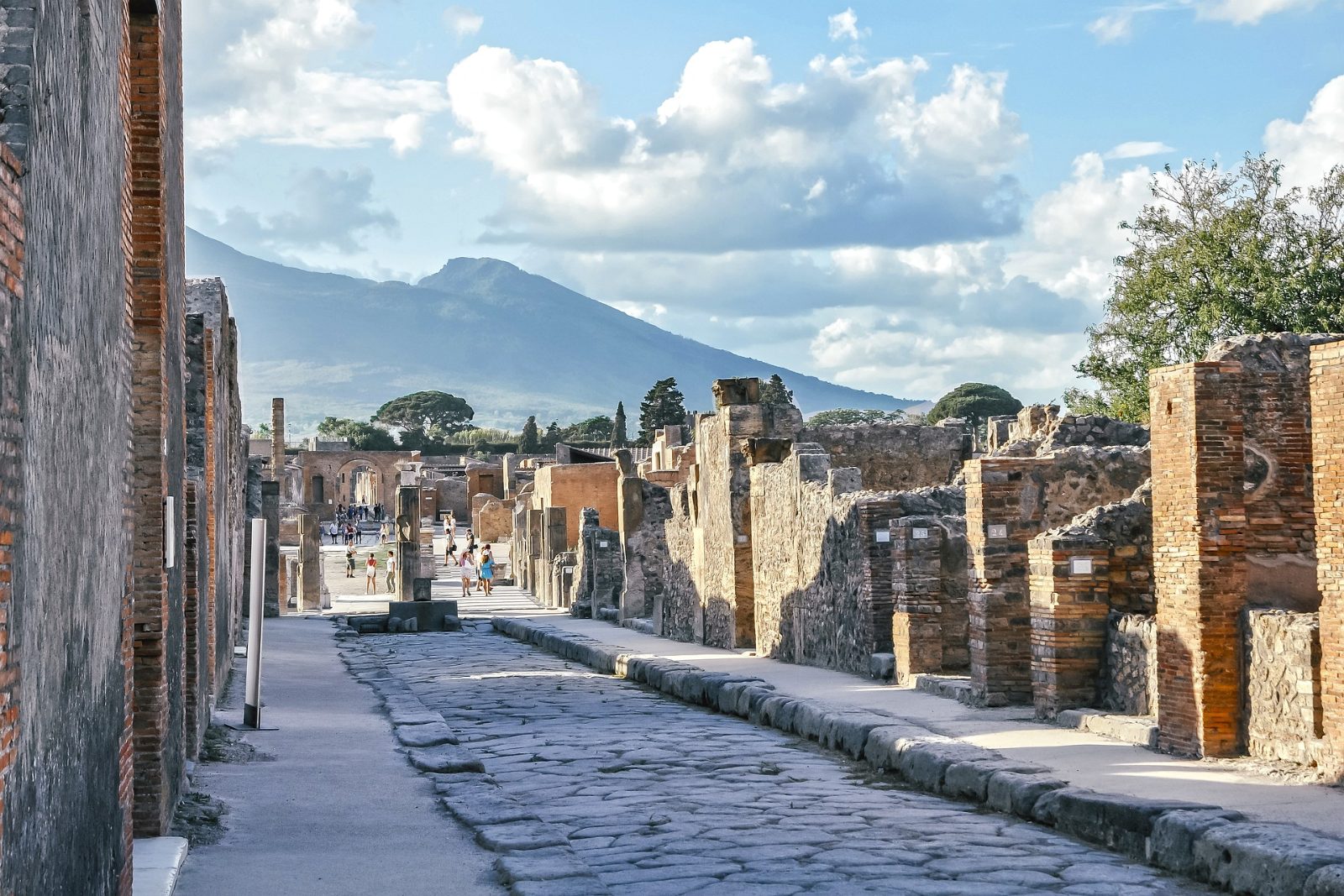
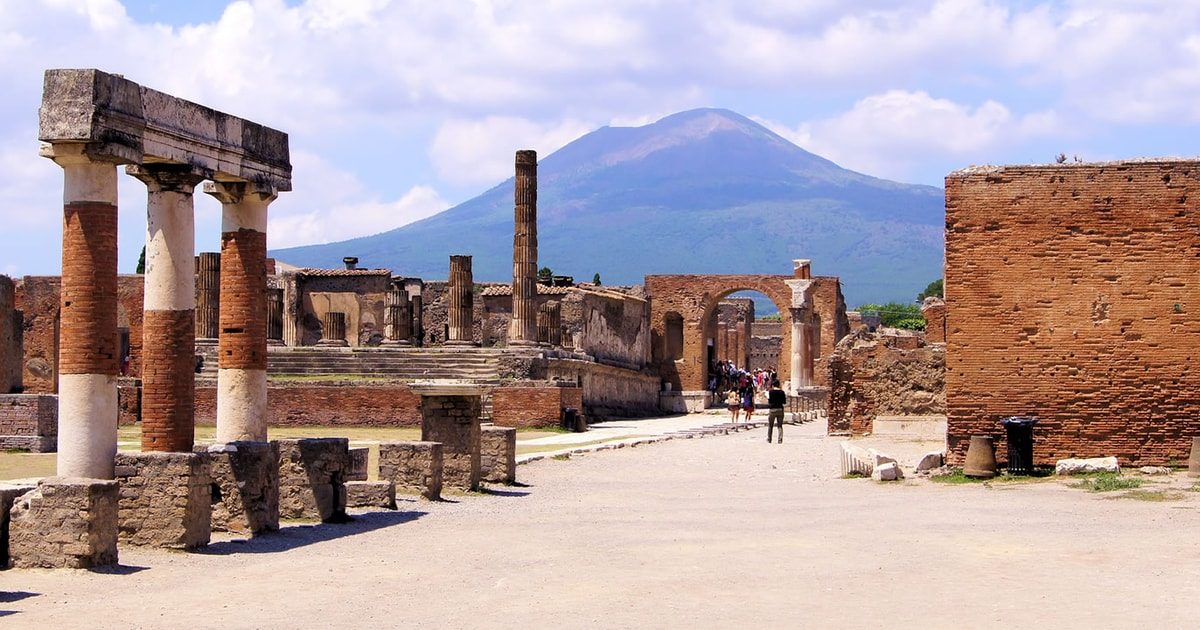
The coach continues to Pompeii. You bypass the ticket line with pre-issued vouchers and enter near the Porta Marina gate. Limestone paving stones show cart ruts worn two thousand years ago. You walk the Via dell'Abbondanza, stepping into the House of the Tragic Poet to see the Cave Canem mosaic. At the Forum, columns frame Vesuvius in the distance. The guide recounts the plaster-cast technique that captured victims' final moments.
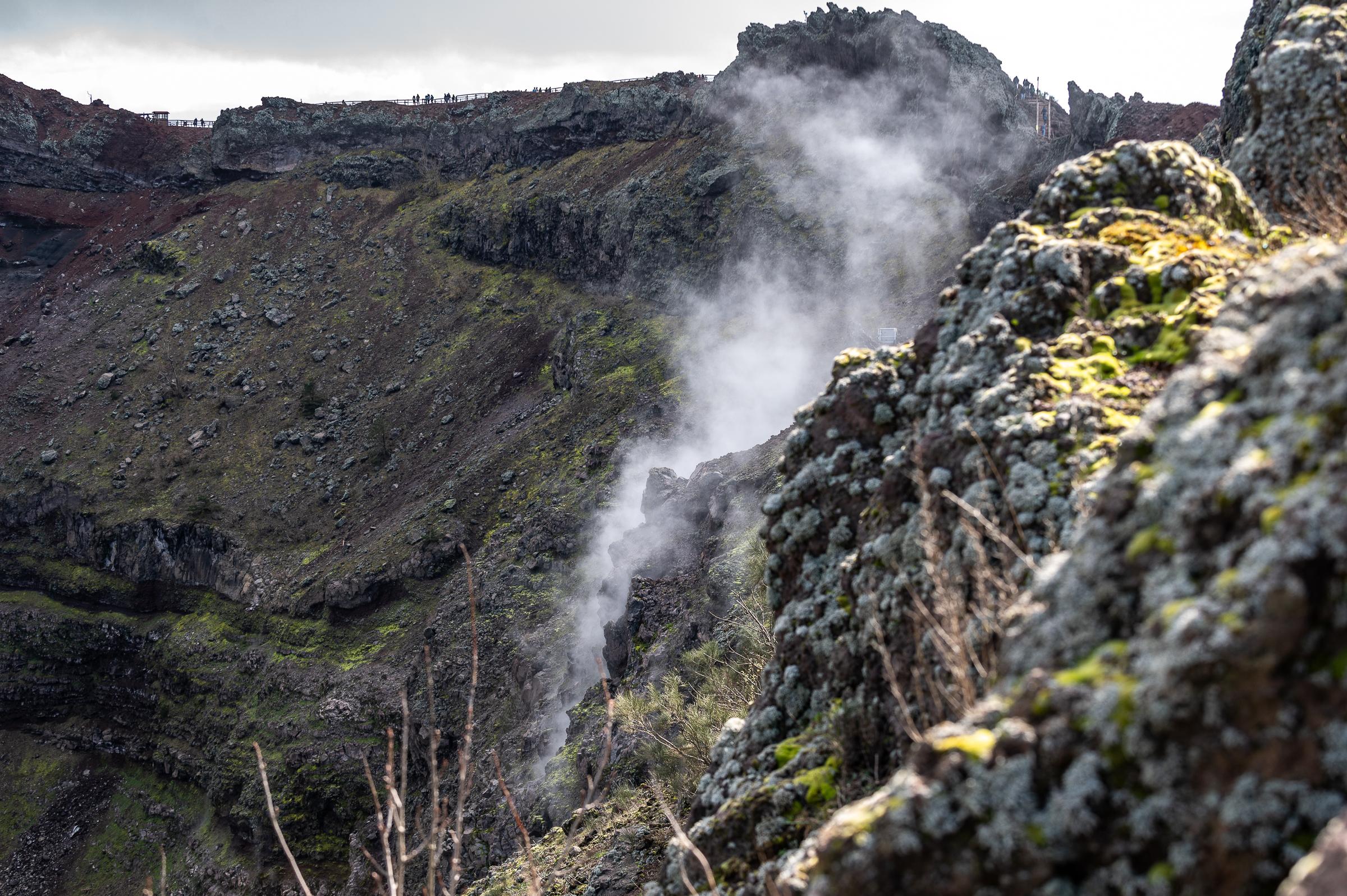
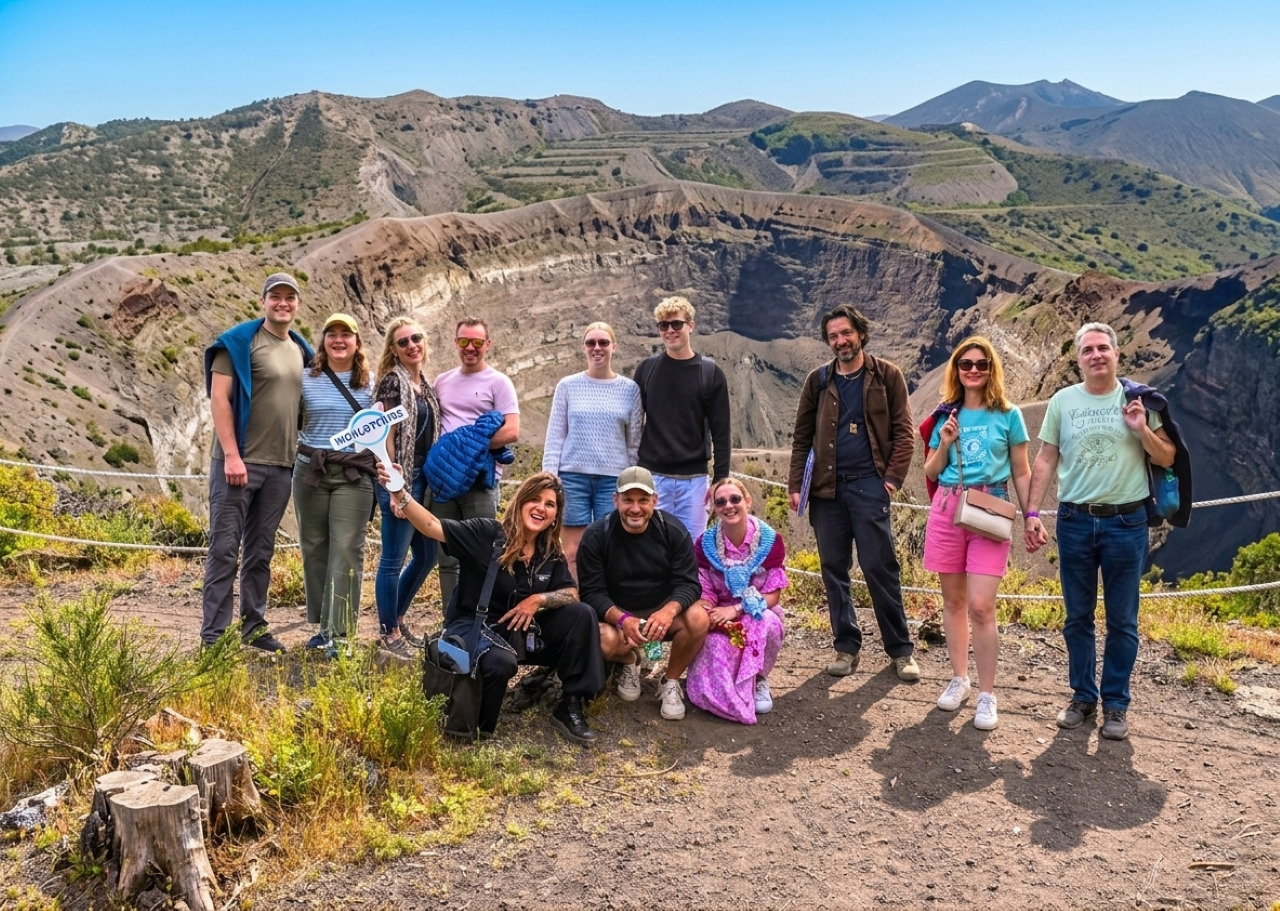
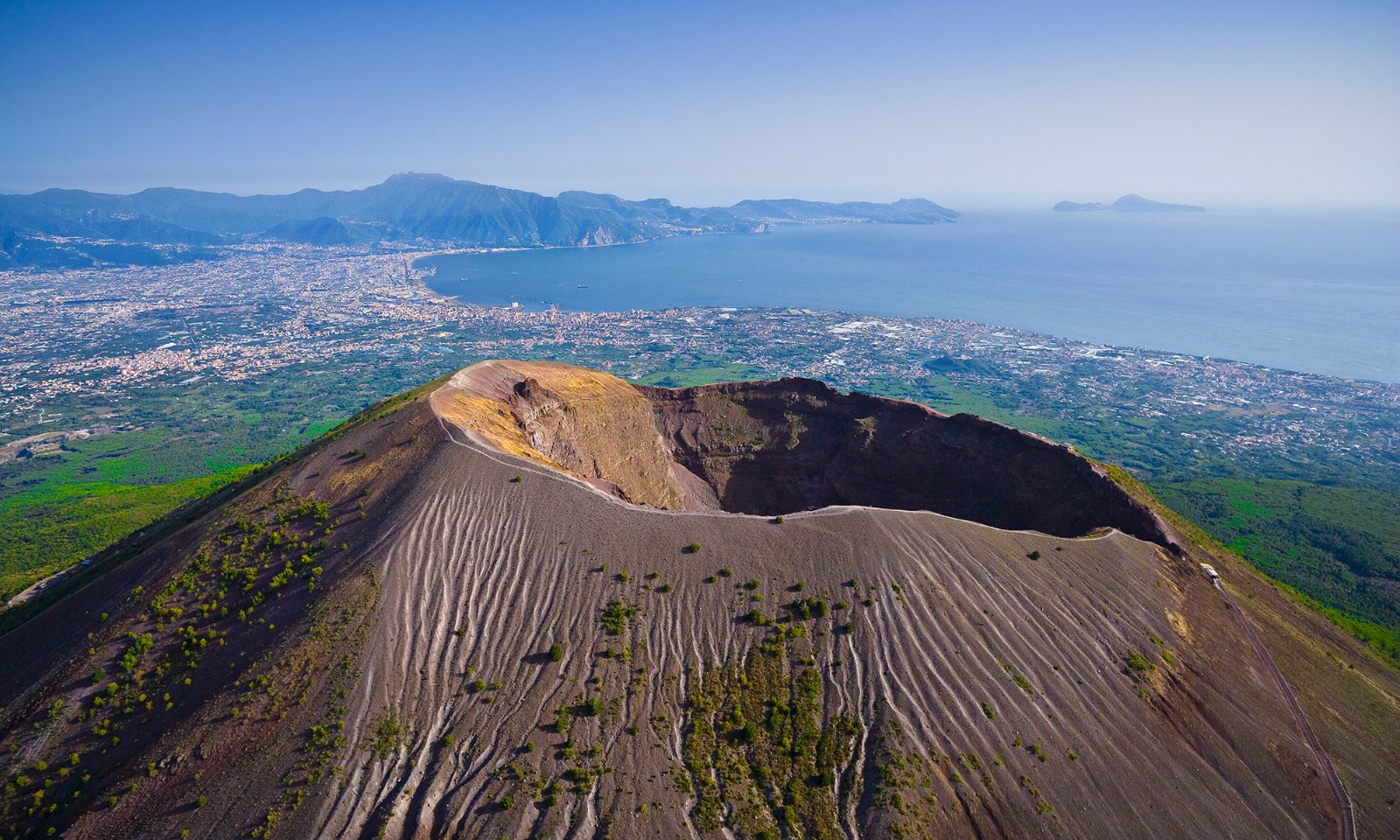
If your itinerary includes Mount Vesuvius, the coach climbs the access road to the 1,000-metre car park. You hike the final 280-metre trail to the crater rim, where fumaroles release sulfur vapour. The Bay of Naples spreads below. You return to the port with ninety minutes to spare before all-aboard.
All the details about your upcoming adventure in one place
When Vesuvius erupted on 24 August AD 79, pyroclastic surges buried two Roman cities in a matter of hours. Pompeii disappeared beneath six metres of pumice and ash.
Herculaneum, closer to the volcano, was sealed under twenty metres of superheated mud that carbonised wood, preserved organic matter, and created a near-perfect archaeological snapshot. The eruption killed an estimated 16,000 people. Rediscovered in the eighteenth century, the sites have since yielded frescoes, mosaics, and everyday objects that reveal how Romans lived, worked, and died.
Today the Pompeii Archaeological Park receives over three million visitors annually, making it Italy's third most-visited cultural site. Herculaneum, smaller and less frequented, offers better-preserved structures: intact wooden beams, vivid wall paintings, and skeletal remains discovered in the boat chambers along the ancient shoreline. Together, the ruins span 170 hectares and contain more than a thousand buildings. UNESCO designated both as World Heritage Sites in 1997. Conservation work continues under the Great Pompeii Project, a European-funded initiative that has stabilised collapsing structures and reopened previously closed insulae.
For cruise passengers arriving at the Port of Naples, shore excursions to these archaeological sites require advance coordination. The port lies thirteen kilometres from Herculaneum and twenty-seven from Pompeii. Half-day tours typically focus on Pompeii alone, allowing four hours on-site before return transfer. Full-day itineraries pair both ruins or add Mount Vesuvius, the 1,281-metre stratovolcano whose crater can be reached by footpath. Priority-entry tickets bypass the ticket-office queues that form by midmorning. Standard adult entry to Pompeii costs 20 EUR; Herculaneum charges 13 EUR. Combined tickets exist but require separate site visits.
The Forum, Stabian Baths, House of the Faun, and Villa of the Mysteries anchor Pompeii's main circuits. At Herculaneum, the College of the Augustales displays polychrome marble floors, and the Villa of the Papyri replica shows how elite Romans decorated suburban estates. Summer temperatures inside the ruins exceed thirty-five degrees Celsius with minimal shade. The archaeological park operates daily from 09:00 to 19:00, with last admission ninety minutes before closing.
When Vesuvius erupted on 24 August AD 79, pyroclastic surges buried two Roman cities in a matter of hours.
Comfortable footwear is essential for a pompeii and herculaneum tour from naples port as streets are uneven. Modest clothing is recommended when visiting nearby religious sites.
Backpacks and bags exceeding 30x30x15 cm are not permitted inside the archaeological areas. Security checkpoints perform random checks on bags at the entrance for every pompeii and herculaneum tour from naples port.
Personal photography is permitted for non-commercial use on this archaeological tour. Use of flash and tripods is strictly prohibited inside the ruins.
Strollers are allowed but can be difficult to maneuver on original Roman stone paving. It is recommended to use child carriers during your pompeii and herculaneum tour from naples port.
Specific routes known as Pompeii for All provide wheelchair access through the main thoroughfares. Contact the park management to confirm the current status of lift operations for your pompeii and herculaneum tour from naples port.
Picnicking is only permitted in designated rest areas within the park. Consuming food or beverages inside the historical buildings is strictly forbidden.
Opening hours
09:00–19:00
Address
Pompeii Archaeological Park, Campania, Italy
Accessibility
Partial paths available for visitors with reduced mobility
Best arrival
09:00–10:30
Luggage
Storage available at park entrances
Official site
https://pompeiisites.org
Public transport · 01:00 · Approx 5 EUR
Use the Circumvesuviana train line from Naples Porta Nolana to the Pompeii Scavi stop.
Taxi · 00:45 · Variable rates
Private transfers offer direct access from the pier to the main entrance of the archaeological site.
Full refunds are typically available if cancellations are made at least 24 hours before the scheduled departure. Bookings including the 20 EUR standard adult entry fee for Pompeii archaeological area may have specific conditions regarding ticket non-refundability.
Recommended time
Full day (7-8 hours)
Executing a successful pompeii and herculaneum tour from naples port requires careful time management, as these UNESCO heritage sites are separated by a significant distance. Expect to spend at least three hours at the larger Pompeii Archaeological Park, followed by a shorter visit to the more compact Herculaneum site. Passengers utilizing pompeii and herculaneum tour from naples port tickets should prioritize an early start to manage transit between the ruins and local transport hubs. Procuring professional pompeii and herculaneum tour from naples port tours can assist in navigating regional train or private shuttle connections efficiently.
Crowd levels through the day
Weather · crowds · average price — dots go green to amber to red as each metric rises.
March to May offer mild temperatures and blooming flora perfect for site exploration.
June to August involve intense heat and peak crowds; hydrate frequently.
September to October provide comfortable walking conditions for a pompeii and herculaneum tour from naples port.
November to February are the quietest months with potential for cooler weather.
Booking an expert-led pompeii and herculaneum tour from naples port provides context to the ruins.
Always check if your operator includes the 20 EUR standard adult entry fee for Pompeii archaeological area in your package price.
Wear closed-toe shoes to protect your feet from the uneven volcanic rock surfaces.
The park offers limited shade so carry high-SPF sunscreen during your pompeii and herculaneum tour from naples port.
Consider downloading official mobile guides if visiting independently to learn about the site's history.
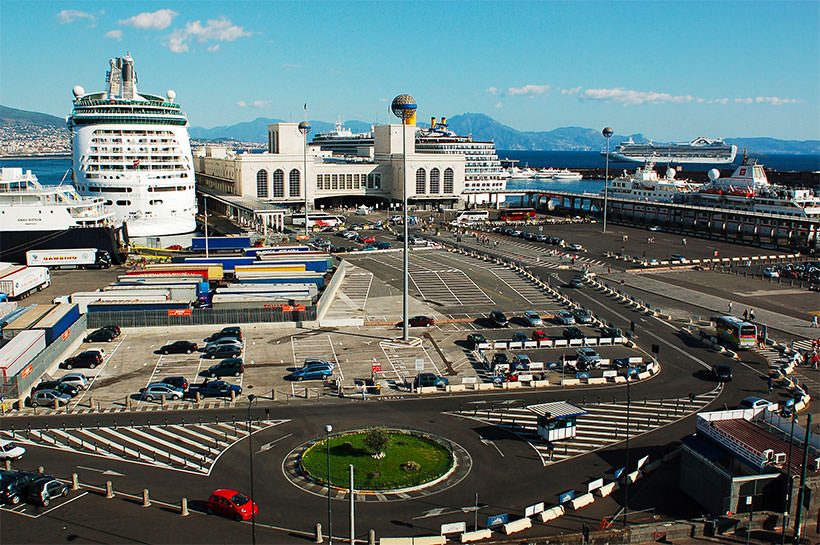
Naples Port, Italy
Look for signs indicating your specific tour operator
Get directions
On August 24, 79 AD, Mount Vesuvius erupted with catastrophic force, burying two prosperous Roman cities in a matter of hours. Pompeii, a commercial hub of roughly 11,000 inhabitants, was engulfed by a six-meter-deep blanket of volcanic ash and pumice. Herculaneum, a smaller coastal resort favored by wealthy Romans, lay closer to the volcano and was struck by superheated pyroclastic surges that carbonized organic matter and sealed buildings in a compact volcanic matrix. The differing burial mechanisms—Pompeii's loose tephra versus Herculaneum's dense pyroclastic flow—would prove crucial to what each site preserved. Both cities vanished from collective memory until the eighteenth century. In 1709, a peasant digging a well in Resina accidentally struck the stage of Herculaneum's theater. Systematic tunneling began under the Bourbon king Charles VII in 1738, yielding the Villa of the Papyri's carbonized library scrolls. Pompeii's rediscovery followed in 1748 when military engineer Rocque Joaquin de Alcubierre uncovered painted walls near Civita. Early excavators treated the sites as quarries for antiquities, shipping marble statues and frescoes to royal collections in Naples. Giuseppe Fiorelli revolutionized the work in 1863 by introducing stratigraphy and the plaster-cast technique, pouring liquid plaster into voids left by decomposed bodies to capture victims' final moments. Today, Pompeii and Herculaneum anchor every pompeii and herculaneum tour from naples port, offering complementary windows into Roman life. Pompeii's sprawling 66-hectare grid reveals urban planning, public baths, amphitheaters, and bakeries with carbonized loaves still in ovens. Herculaneum's compact four-hectare core preserves wooden fixtures, intact upper stories, and vivid frescoes untouched by Pompeii's ash damage. The boat sheds along Herculaneum's ancient shoreline, discovered in the 1980s, held the skeletons of three hundred residents who fled toward the sea. Both UNESCO World Heritage sites continue to yield discoveries—thermopolium counters with food residue, election graffiti, and private libraries—that illuminate daily existence under the shadow of Vesuvius two millennia ago.
Mount Vesuvius erupts on August 24, burying Pompeii in ash and Herculaneum in pyroclastic surges
A peasant digging a well at Resina accidentally uncovers Herculaneum's theater
Bourbon king Charles VII begins systematic excavation tunnels at Herculaneum under engineer Alcubierre
Military engineer Alcubierre discovers painted walls at Pompeii near the town of Civita
Giuseppe Fiorelli introduces stratigraphic excavation methods and invents the plaster-cast technique for victims
Archaeologists discover boat sheds along Herculaneum's ancient beach containing three hundred skeletons
UNESCO designates both Pompeii and Herculaneum as World Heritage sites
Ongoing excavations reveal thermopolia with preserved food residues and additional residential quarters
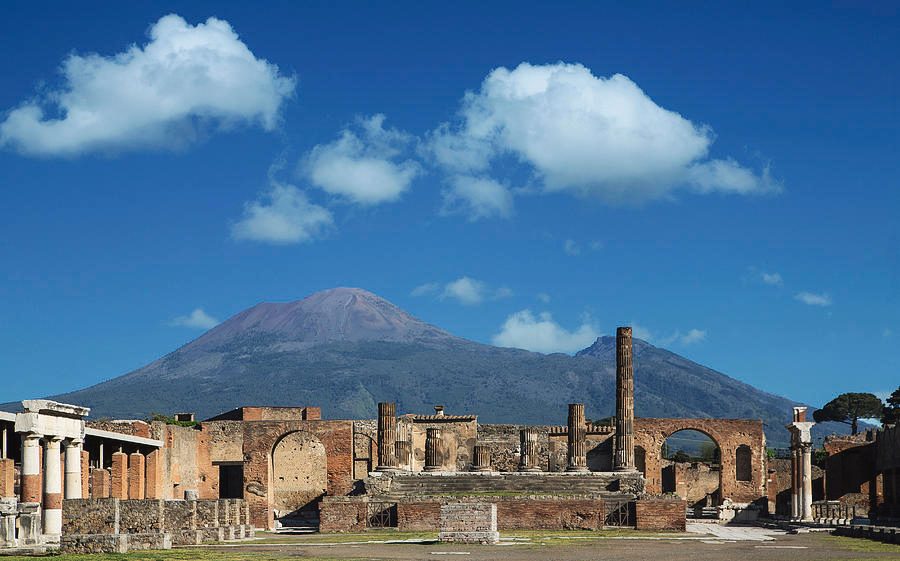
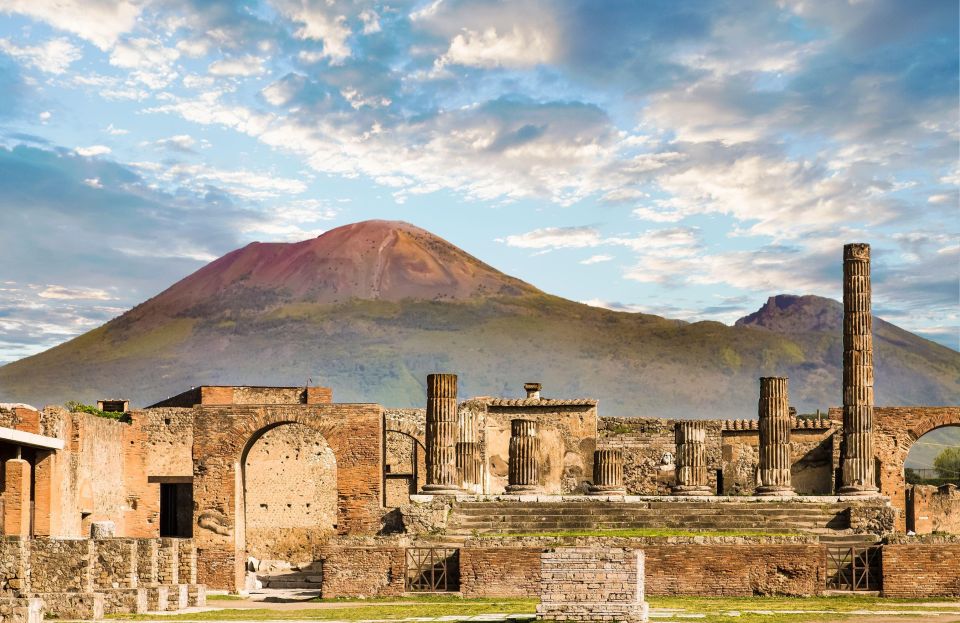
Stand at the northern end looking toward the basilica to capture the columns framed by the mountain. This spot is a central point for a pompeii and herculaneum tour from naples port.
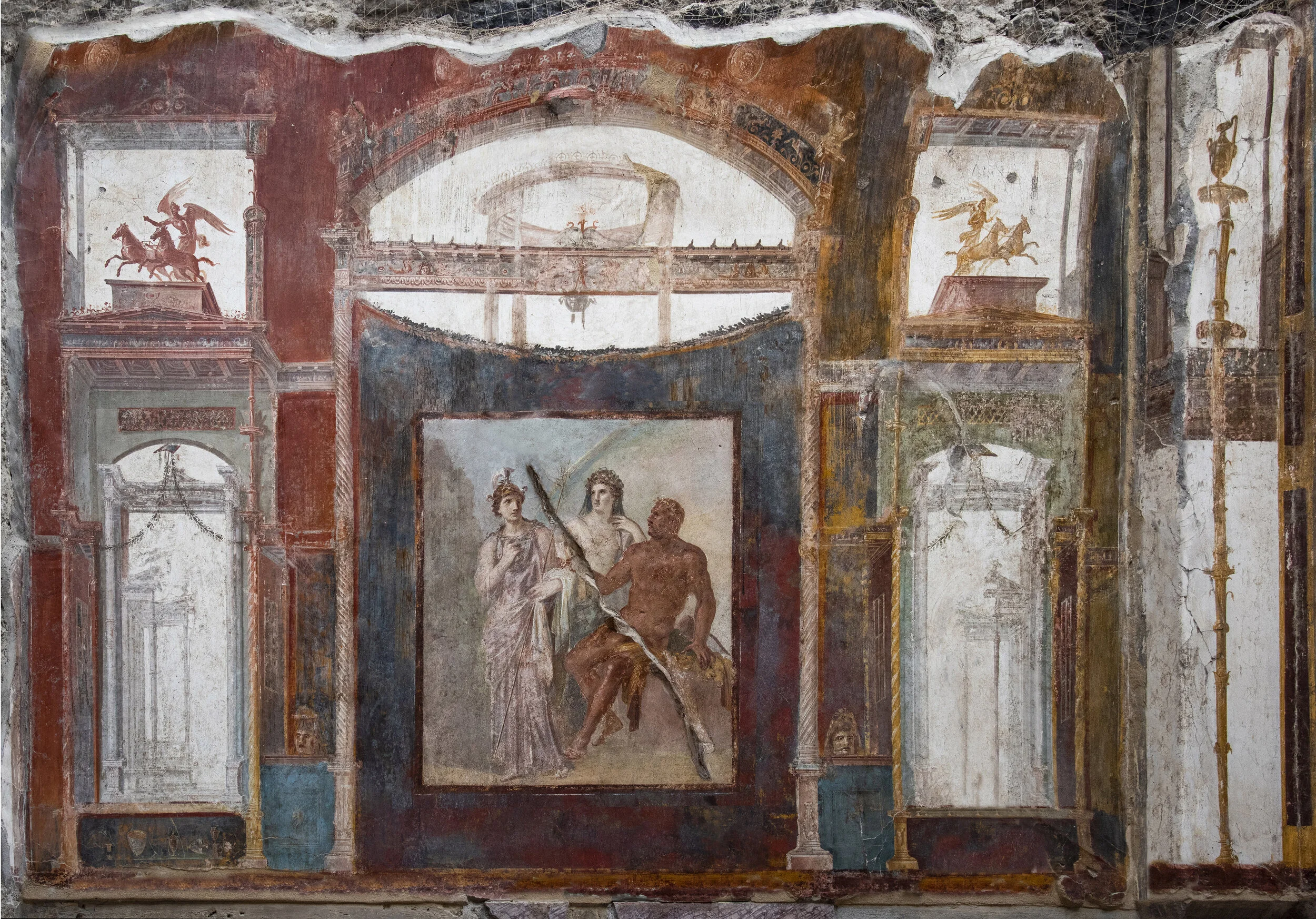
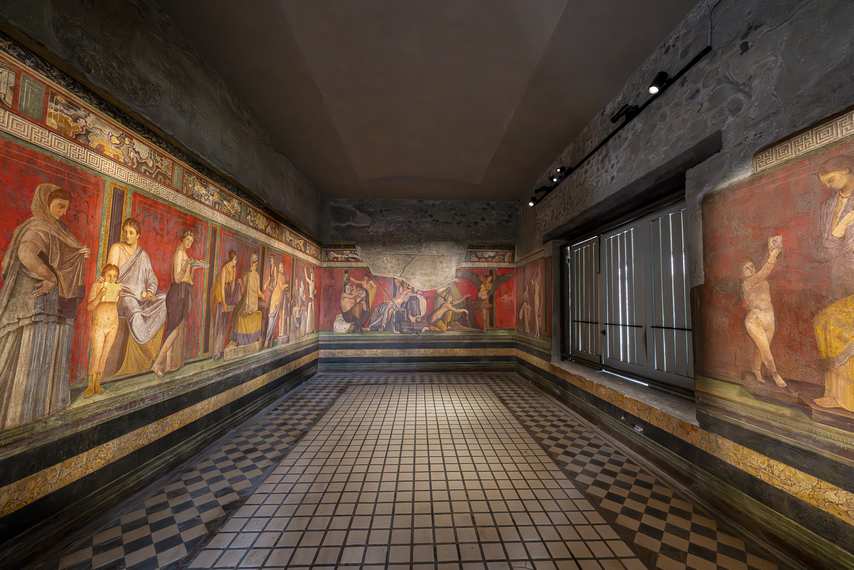
Position yourself in the center of the hall to photograph the well-preserved frescoes on the side walls. Access is managed via the wooden walkways surrounding the site.
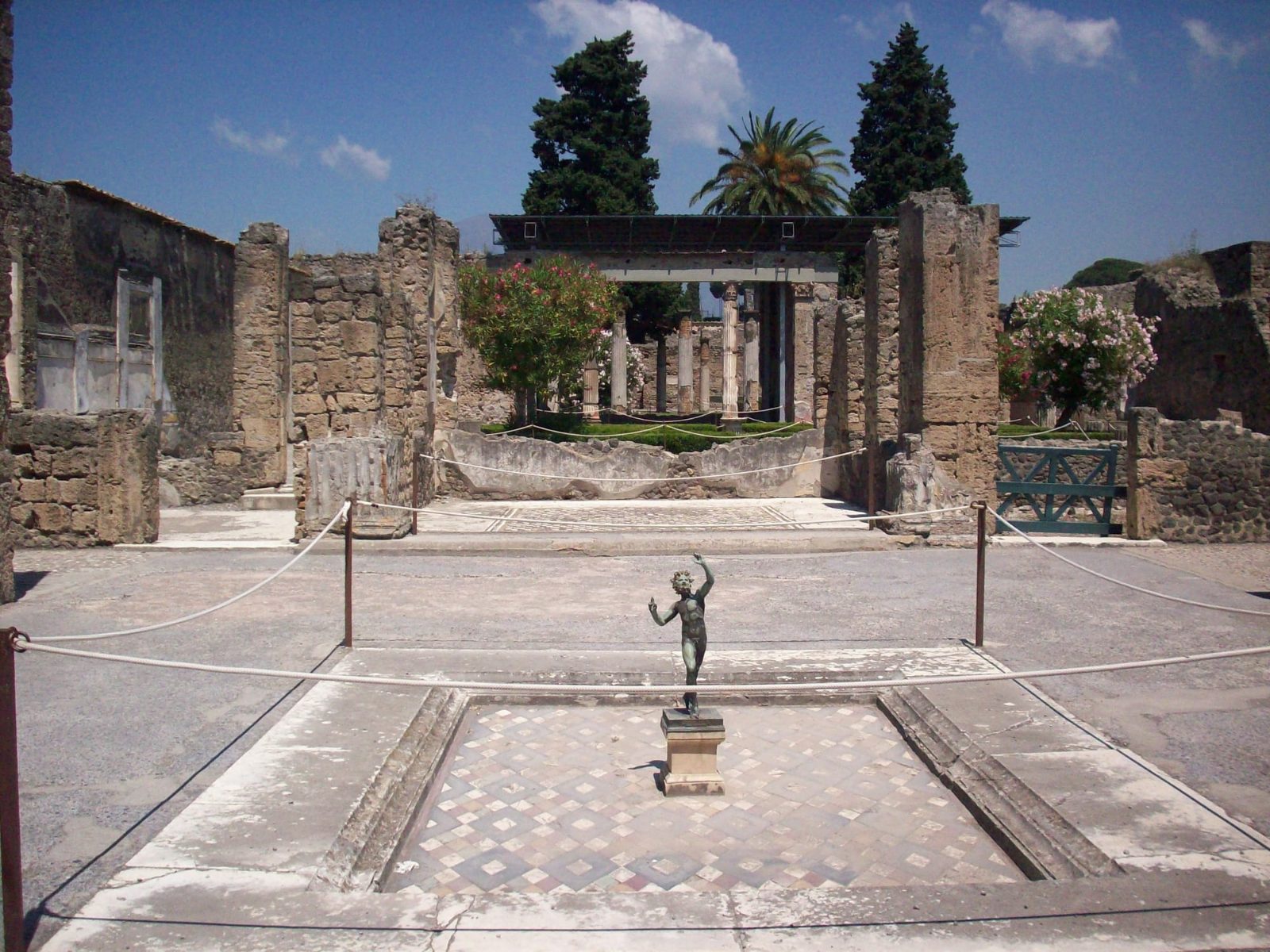
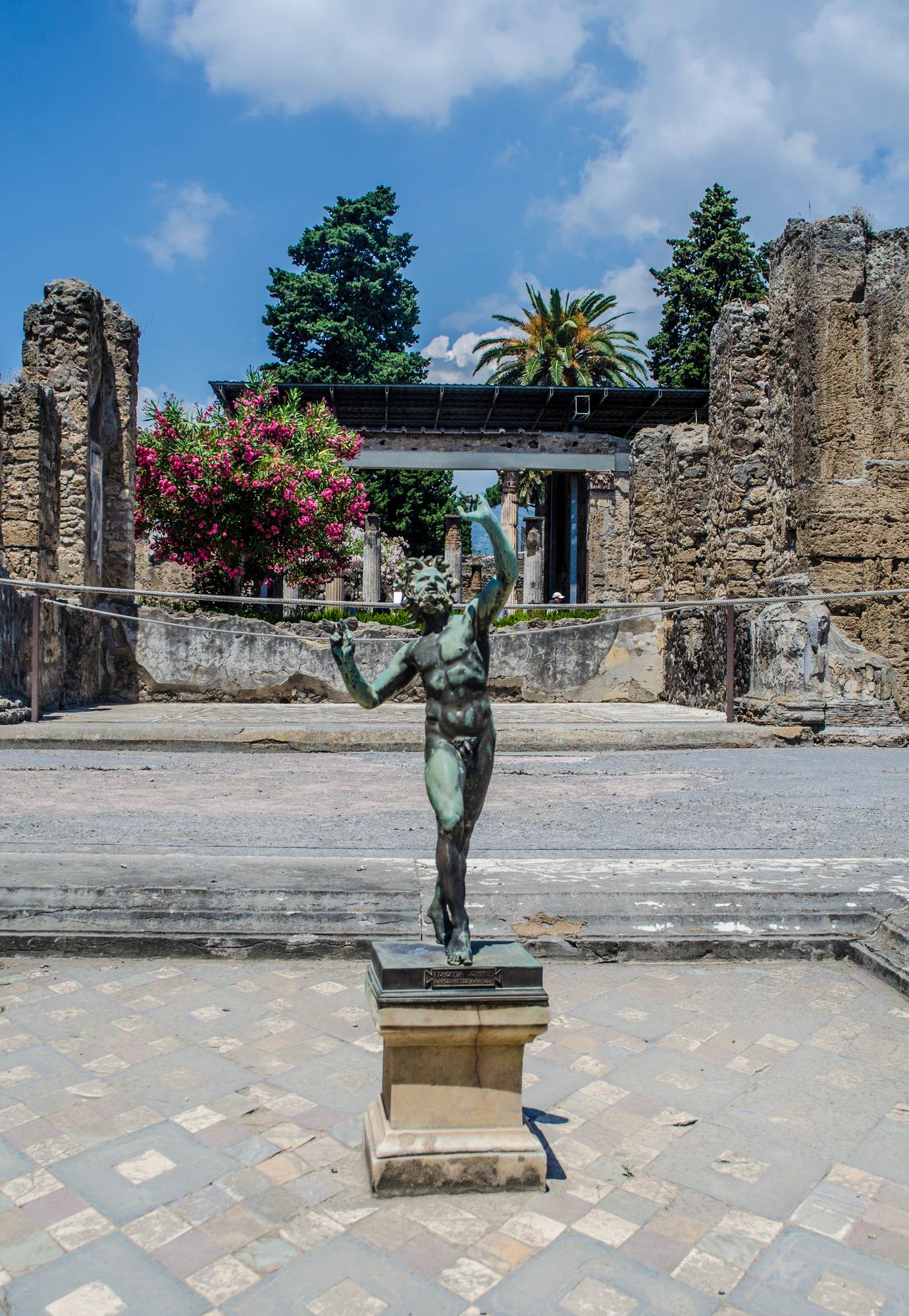
Frame your shot through the doorway of the atrium to capture the replica of the bronze dancing faun statue. This classic perspective remains a highlight for visitors using pompeii and herculaneum tour from naples port tours.
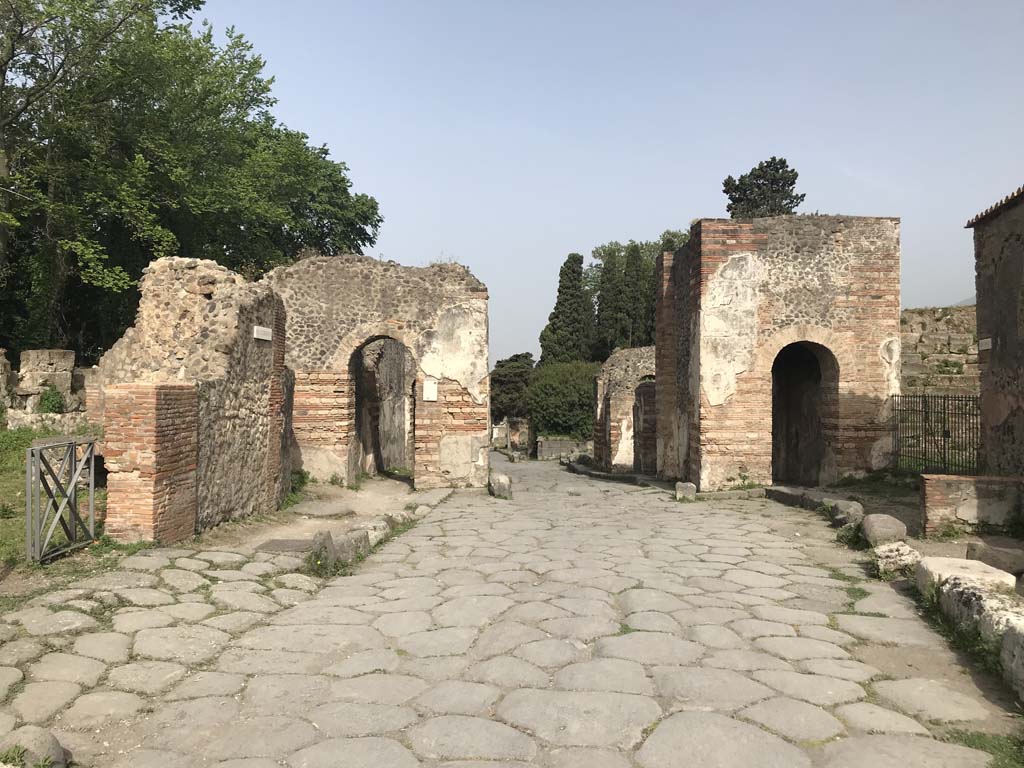
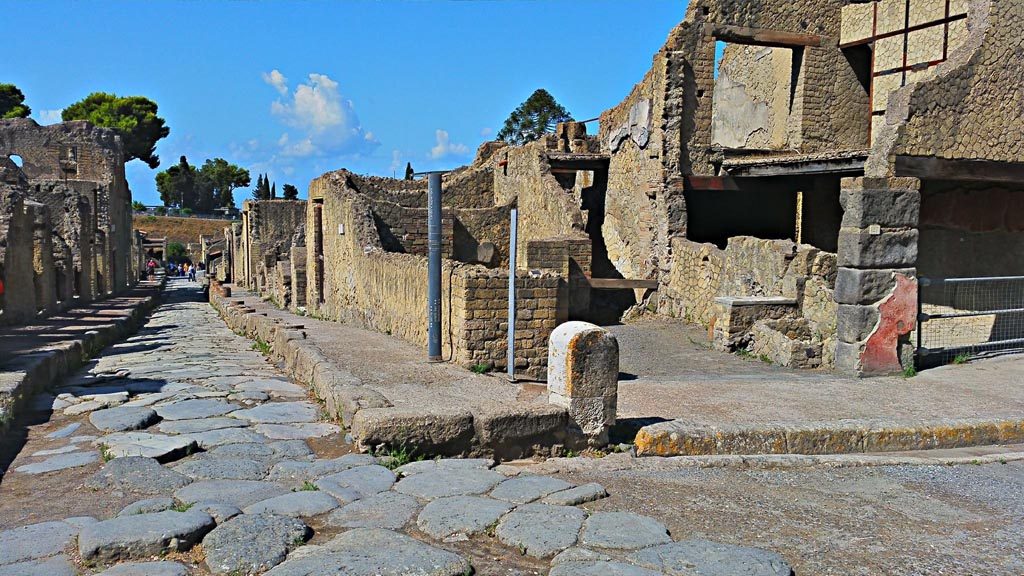
Look down the length of this ancient street to see the volcanic strata layers exposed in the cliffside above the town. The narrow path offers a unique scale for those selecting a pompeii and herculaneum tour from naples port tour.
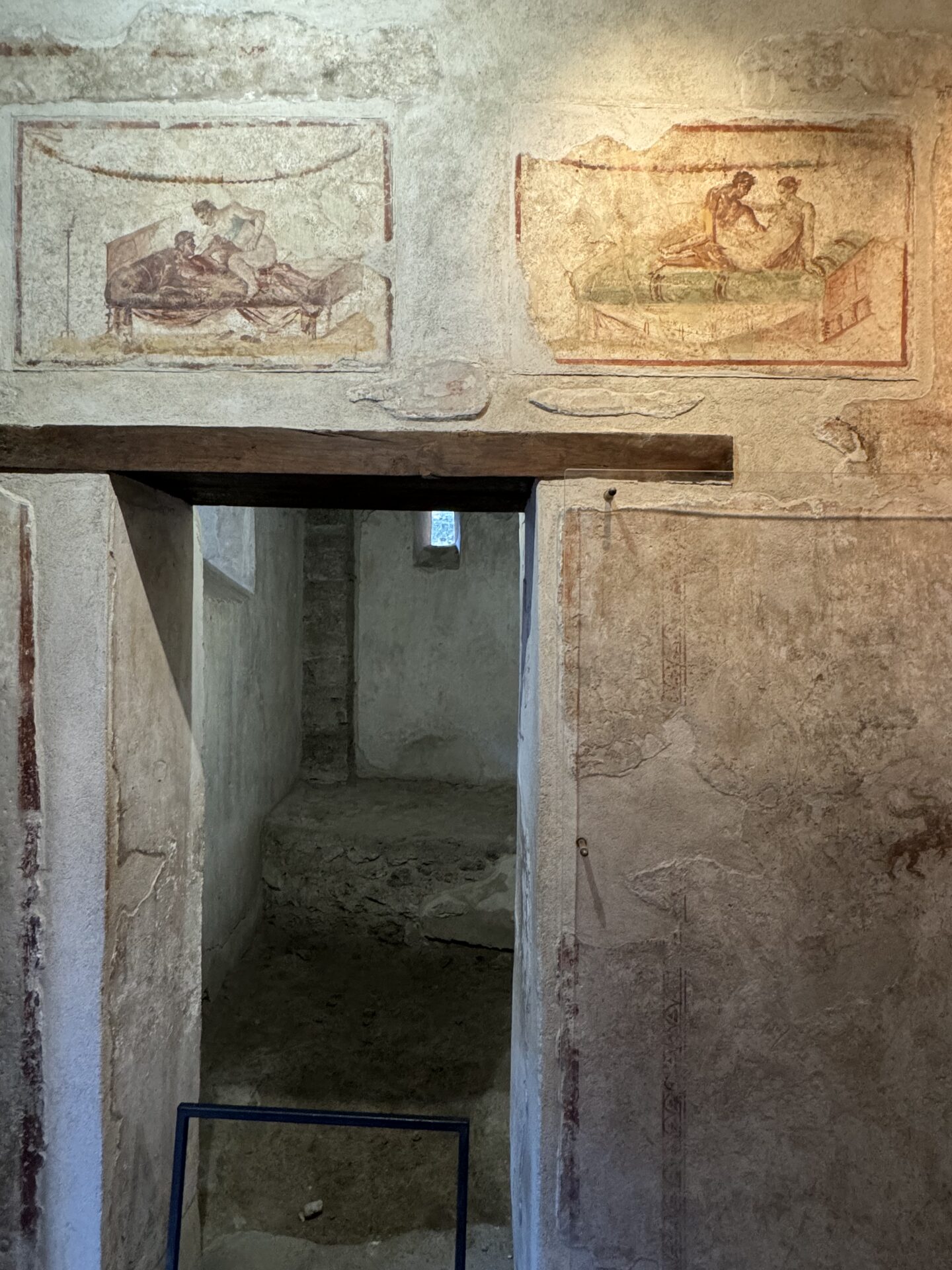
Focus on the stone beds and the interior wall paintings while standing in the small hallway. Avoid peak hours to gain a clear line of sight into the masonry alcoves using pompeii and herculaneum tour from naples port tickets.
Visiting the historic ruins with children can be a rewarding adventure when you balance structured exploration with plenty of downtime. A well-planned pompeii and herculaneum tour from naples port helps families navigate the expansive site while keeping younger travelers engaged and comfortable.
While the 3.5-km “Pompeii for All” path is designed to be stroller-accessible, the ancient, uneven stone streets make a lightweight baby carrier a far more practical choice for most of the park. You can leave large pushchairs at the luggage storage facilities located at the entrances for free.
Children aged 6 to 12 typically find the site most engaging as they can follow storytelling and visualize life in an ancient Roman city. Younger toddlers may find the extensive walking tiring, so plan for frequent shade breaks and snacks during your pompeii and herculaneum tour from naples port tours.
Three dedicated baby-changing points are available within the site; simply collect the key at the park entrance when you arrive. These facilities offer the privacy needed for changing or feeding in a comfortable, quiet environment.
Given the size of the Pompeii Archaeological Park, aim to focus on key highlights like the Forum or public baths rather than attempting to cover every area. Keeping your visit to roughly 3 to 4 hours prevents exhaustion and ensures a more positive experience for the whole family.
On-site dining is limited to basic self-service options, so packing your own drinks and snacks is highly recommended. For a more substantial meal, consider visiting the modern town of Pompeii outside the park boundaries before or after your pompeii and herculaneum tour from naples port ticket experience.
The site is almost entirely outdoors with very limited covered areas, making it difficult to find shelter during heavy rain. If the weather forecast looks poor, check official updates at https://pompeiisites.org or consider rescheduling to a drier day to ensure you can safely explore the historic landmarks.
Anyone joining a pompeii and herculaneum tour from naples port will find quick, reliable eating near the main gates rather than inside the ruins themselves, since the archaeological area has no full-service restaurant. Most groups grab a bite on Via Roma or Via Plinio in Pompeii town before or after entry, while Ercolano's option sits just steps from the Herculaneum entrance.
A long-running favorite for tour groups, known for Neapolitan pasta and pizza; book ahead as coach parties fill it fast around lunchtime.
Quick espresso, panini and cold drinks for a fast stop before or after the skip-the-line Pompeii archaeological park visit; counter service keeps lines short.
Handy if you exit near the amphitheater; solid pizza and grilled dishes, busiest right at midday when tour buses unload.
A quieter option away from the main strip, good for wine and traditional Campanian plates if your schedule allows extra time.
Simple sandwiches, gelato and bottled water for a quick refuel between the Pompeii and Herculaneum sites.
Convenient for a short coffee or light lunch stop right after touring the Herculaneum excavations, with outdoor seating.
Everything you need to know for your journey
The sites are open daily from 09:00–19:00.
The Pompeii for All project provides designated routes for wheelchair users at the Pompeii Archaeological Park.
This is the standard adult entry fee for Pompeii archaeological area required for site access.
The best arrival window is 09:00–10:30 to avoid the midday heat and peak crowds.
Bags larger than 30x30x15 cm must be left in storage; smaller items are allowed.
Yes, non-commercial photography is allowed, but tripods are prohibited in the Pompeii Archaeological Park.
Wear comfortable walking shoes and light clothing suitable for the climate of the Campania, Italy region.
Food is only allowed in designated rest areas within the Pompeii Archaeological Park.
Yes, restrooms are available at designated locations throughout the archaeological sites.
Volcanic peak overlooking the buried cities with panoramic views.
Ancient villa known for its well-preserved frescoes.
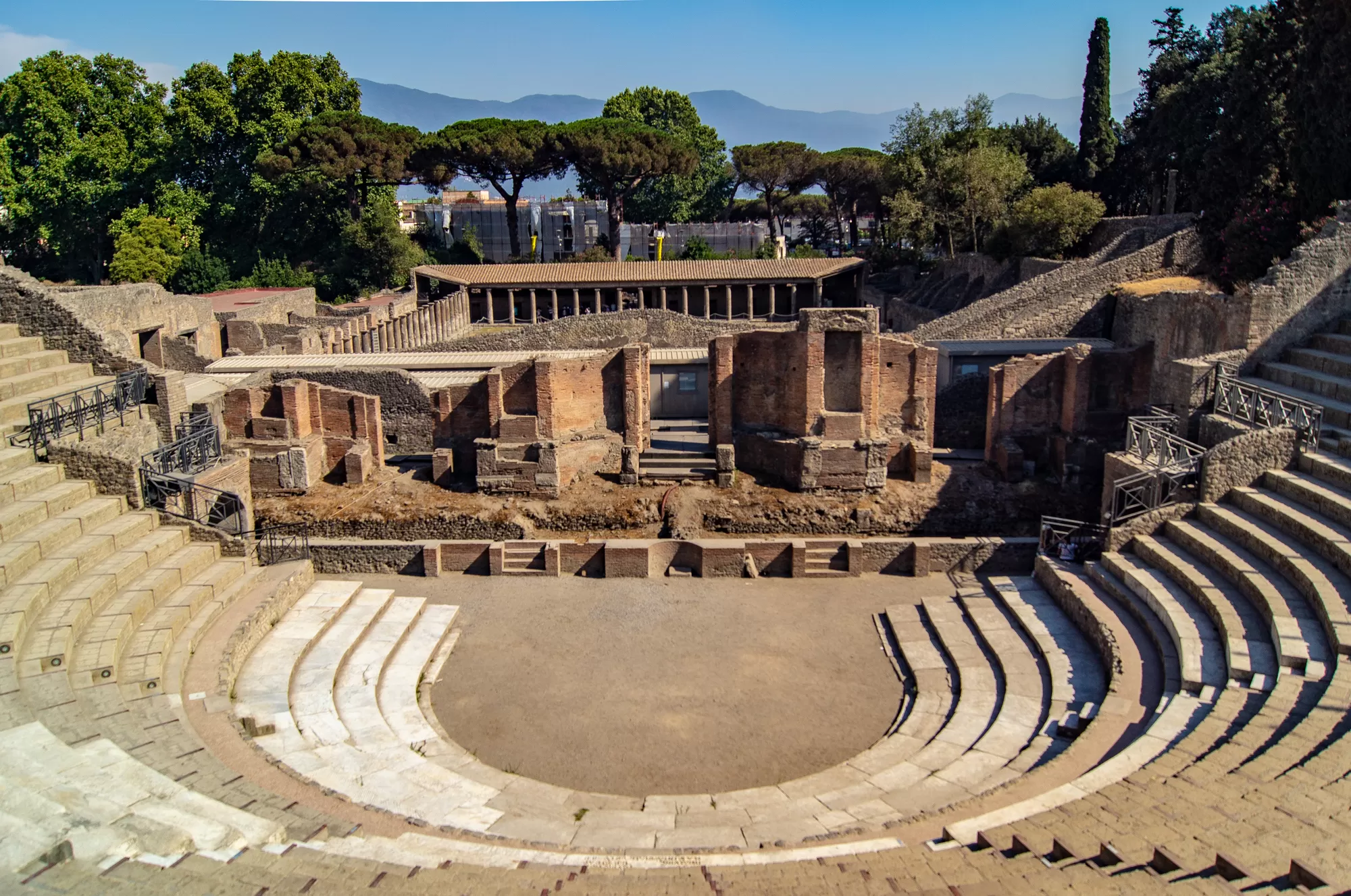
Large ancient theater used for public performances.
One of the largest and most impressive residences in the city.
Convenient hotel located steps from the ruins.
High-end stay with modern amenities near the site.
Local accommodation options in Pompeii town.
Join thousands of happy travelers who have discovered this incredible experience
Book Your Experience Now